

19-02-2026
Different Types of Pressure Vessels
Pressure vessels are enclosed containers designed to hold gases or liquids at pressures significantly different from ambient conditions. Pressure vessels are mainly classified into four categories according to their construction materials, along with additional variations based on shape, orientation, and intended industrial application.
1.Classification by Construction (Composite & Metal Types)
Pressure vessels are commonly categorized into four, and occasionally five, types according to the construction materials used, ranging from conventional metal designs to advanced composite structures.- Type 1: Made entirely of metal (usually steel or aluminum). They are cost-effective and easy to manufacture but are significantly heavier than other types.
- Type 2: Constructed with a metal inner liner wrapped partially with composite material (like carbon fiber) to share the load. This improves strength and reduces weight while keeping costs moderate.
- Type 3: Features a thinner metal liner (steel or aluminum) fully wrapped in carbon-fiber composite, which takes on the pressure load. These are lighter and handle higher pressures but are more expensive.
- Type 4: Fully made of carbon-fiber composites with an inner liner made of polymers (like polyamide or polyethylene plastic). They are extremely lightweight and strong, though they carry a higher price point.
- Type 5: Emerging linerless composite pressure vessels (CPVs) that offer maximum structural efficiency by completely eliminating the inner liner.
2. Classification by Shape
- Cylindrical: The most common design across industries. Cylindrical vessels are easier to fabricate and allow for uniform stress distribution throughout the main shell.
- Spherical: The ideal shape for withstanding very high internal pressures because stress is distributed evenly in all directions. They use less material to achieve the same capacity, but their fabrication process is more intricate and costlier.
- Conical: Commonly applied in specialized equipment like hoppers and separators, where precise material handling and controlled flow are important.
3. Classification by Orientation
- Horizontal: Commonly used for large-scale liquid storage (like "storage bullets"), separators, and heat exchangers where floor-level stability and large volumes are needed.
- Vertical: Often preferred for process vessels like distillation columns, reactors, and absorbers where a compact footprint is required and gravity-assisted fluid flow is beneficial.
4. Classification by Function
Depending on their specific operational requirements, vessels are also named for what they do:- Boilers: Process vessels specifically designed to heat water or generate steam.
- Reactors: Enclosed containers used to carry out chemical reactions under highly controlled temperature and pressure conditions (common in pharmaceutical and petrochemical industries).
- Heat Exchangers: Used to transfer thermal energy between two or more fluids without mixing them.
- Storage Tanks: Stationary or mobile vessels built to store pressurized fluids (e.g., LPG tanks, compressed air receivers)
What is a Pressure Vessel?
A pressure vessel is a closed container designed to hold gases or liquids at a pressure substantially higher or lower than the surrounding ambient pressure. Its main function is to safely store, process, or transport substances under controlled pressure conditions. Pressure vessels are engineered to strict safety standards such as ASME (American Society of Mechanical Engineers) codes to prevent rupture, leaks, or explosions.The basic structure of a pressure vessel typically comprises a cylindrical or spherical shell, end caps (called heads), nozzles for fluid entry and exit, and support structures. As pressurized fluid enters the vessel, it is safely contained and processed — which is essential in operations like distillation, heat exchange, and chemical reactions.
Types of Pressure Vessels
Even though there are various types of pressure vessels, they all serve the same fundamental purpose of containing pressurized substances. However, they have unique features, advantages, and applications. Let's look at them below:1. Storage Vessels
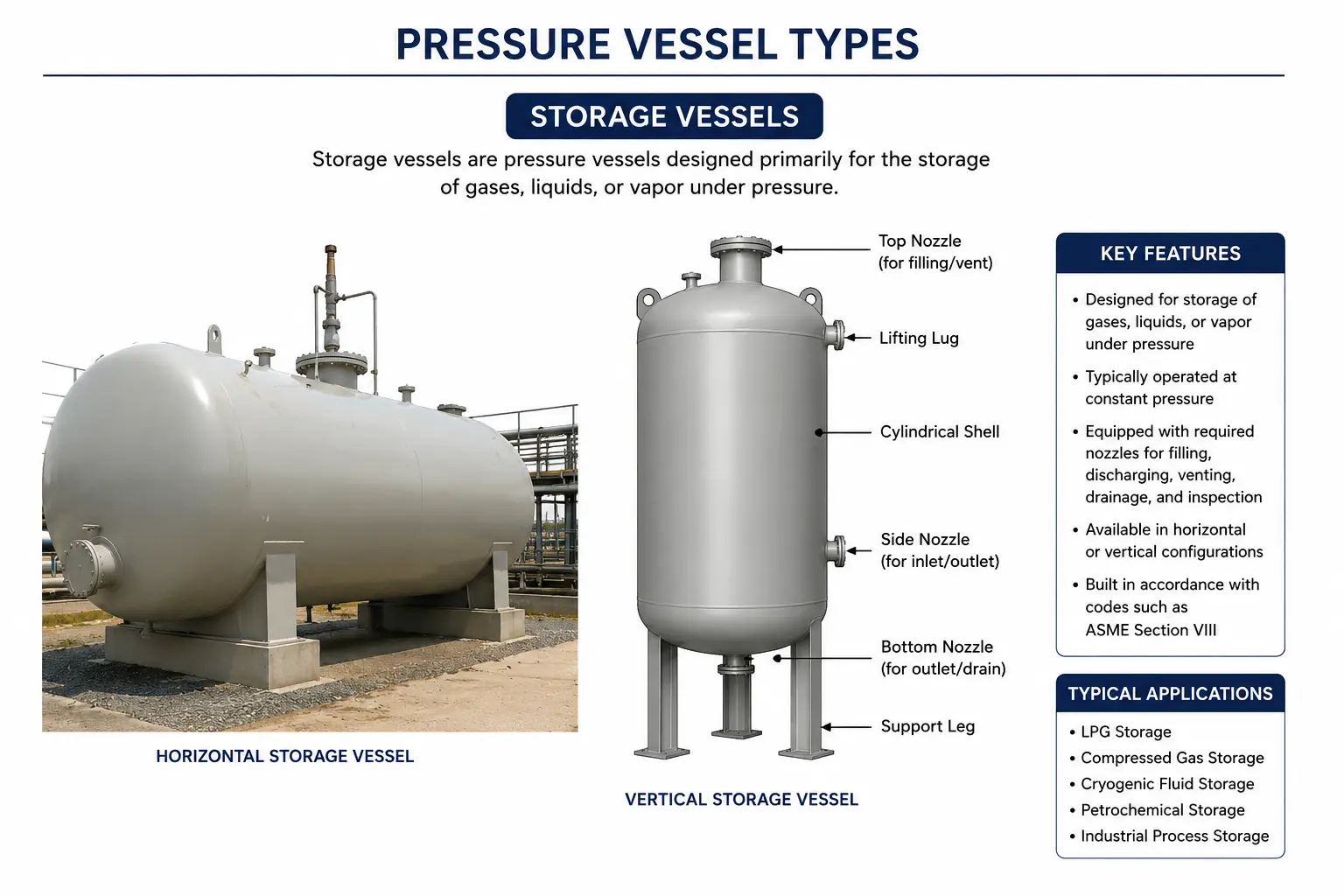 Storage vessels are the most common type of pressure vessel. They are designed to hold liquids or gases under pressure for a defined period of time. These vessels do not participate in any chemical reaction — they simply store the contents safely until needed.
Typical examples include propane tanks, compressed air receivers, and liquid nitrogen containers. Storage vessels are built in horizontal or vertical orientations depending on the application and available space.
Storage vessels are widely used in oil & gas storage, chemical plants, water treatment facilities, and industrial compressed air systems.
2. Heat Exchanger Vessels
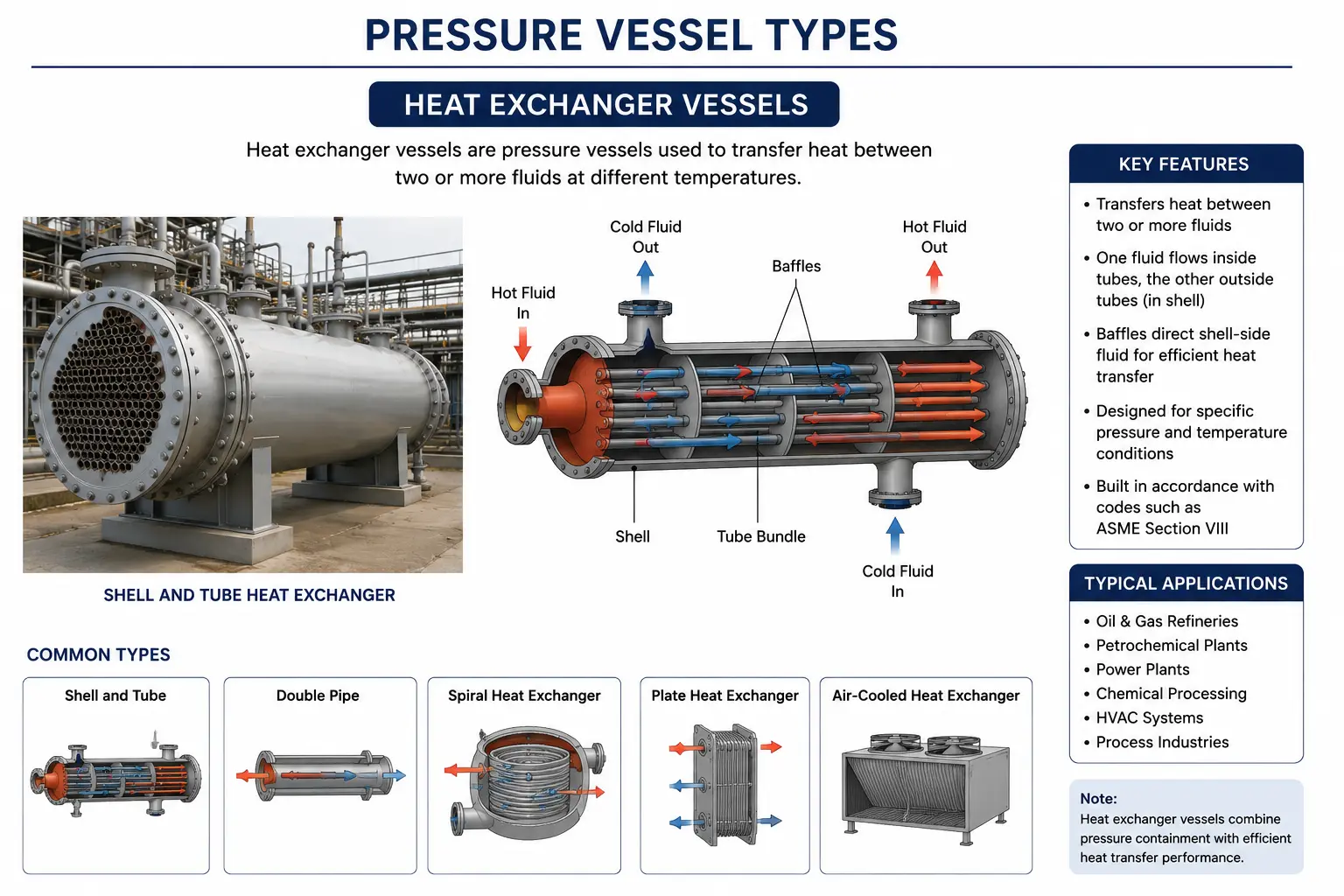 Heat exchanger vessels are pressure vessels specifically designed to transfer heat between two fluids without allowing them to mix. They combine the pressure-containment requirements of a vessel with the thermal transfer functionality of a heat exchanger. The shell-and-tube heat exchanger is the most recognized design in this category.
One fluid flows through tubes inside a pressurized shell, while the other fluid flows around the tubes within the shell. The temperature difference between the two fluids drives the heat transfer process.
Heat exchanger vessels are commonly found in power plants, HVAC systems, chemical processing, oil refineries, and food & beverage manufacturing.
3. Process Vessels
Process vessels are pressure vessels in which chemical or physical processes take place. Unlike storage vessels, process vessels are active participants in industrial operations. They are designed to handle the pressures and temperatures generated during reactions, separations, or transformations.Common examples include reactors, distillation columns, absorption towers, and mixing vessels. Process vessels often include internal components like trays, packing, agitators, or coils to facilitate the intended process.
Process vessels are primarily used in petrochemical plants, pharmaceutical manufacturing, food processing, and specialty chemical production.
4. Reactor Vessels
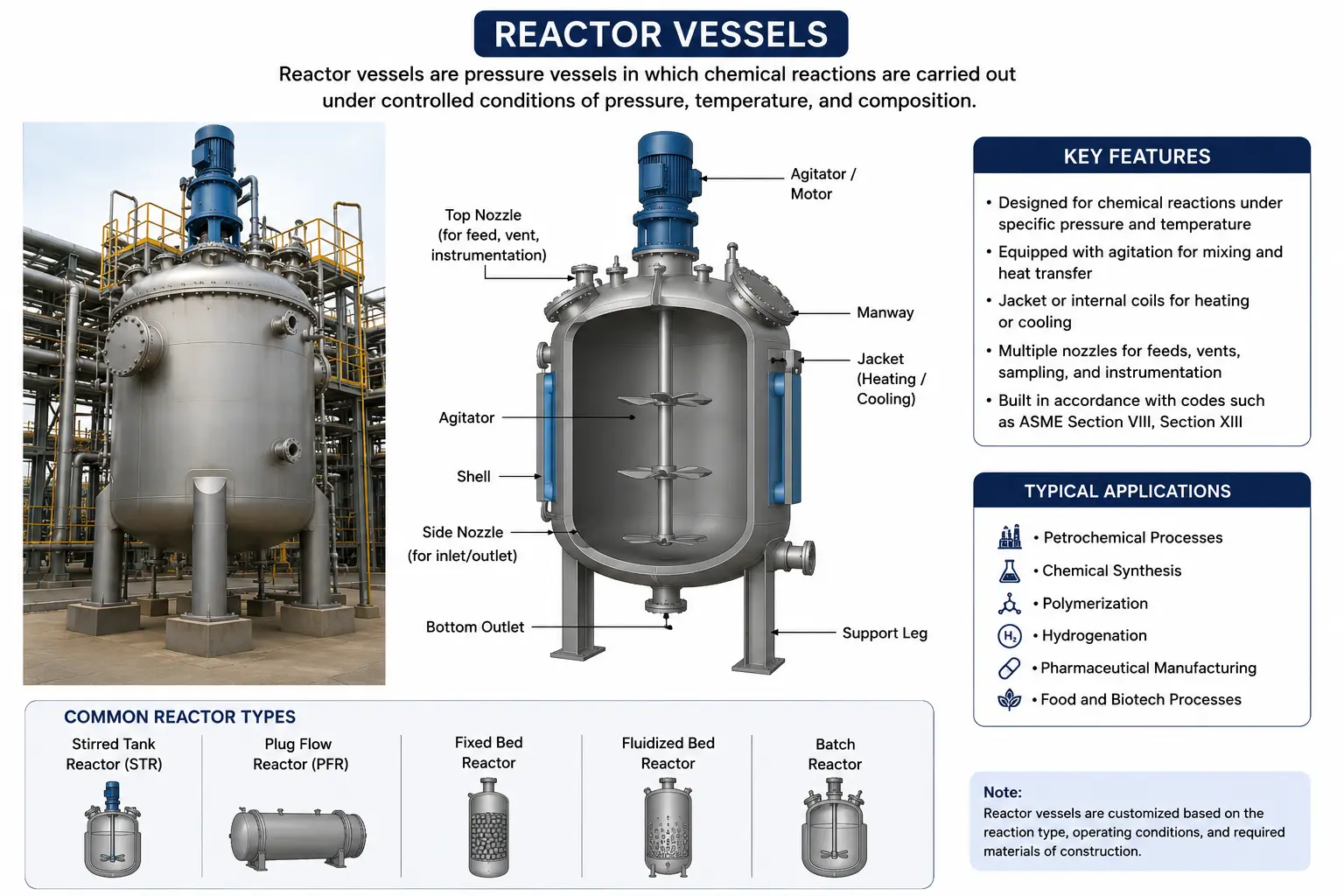 Reactor vessels are a specialized subcategory of process vessels where controlled chemical reactions occur under elevated pressure and temperature. These are among the most critical and heavily engineered pressure vessels due to the reactive, often exothermic nature of their contents.
They are constructed from special alloys or lined materials to resist corrosion from aggressive chemicals. Reactor vessels are often equipped with precise temperature and pressure monitoring instruments to ensure process safety and product quality.
Reactor vessels are heavily used in petrochemical plants for catalytic cracking, pharmaceutical synthesis, polymer production, and fertilizer manufacturing.
5. Boilers
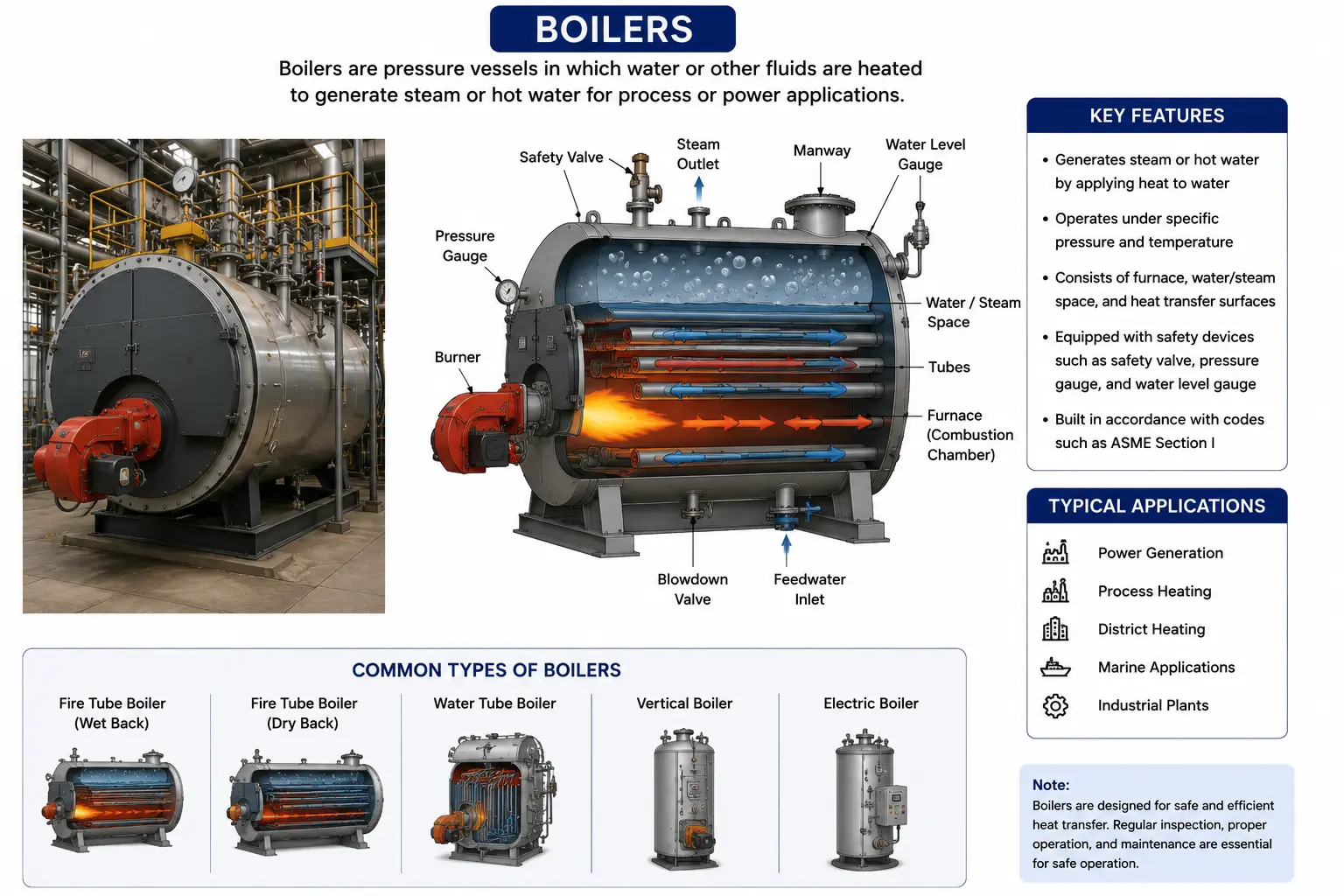 Boilers are pressure vessels designed to generate steam or hot water by applying heat to water. The steam produced is then used for power generation, heating, or industrial processes. Boilers operate under strict safety regulations due to the energy stored in high-pressure steam.
There are two main categories: fire-tube boilers, where combustion gases pass through tubes surrounded by water, and water-tube boilers, where water flows through tubes surrounded by combustion gases. Water-tube boilers are preferred for high-pressure, high-capacity applications.
Boilers are used in power generation plants, steam-driven machinery, building heating systems, chemical processing, and food sterilization.
6. Autoclaves
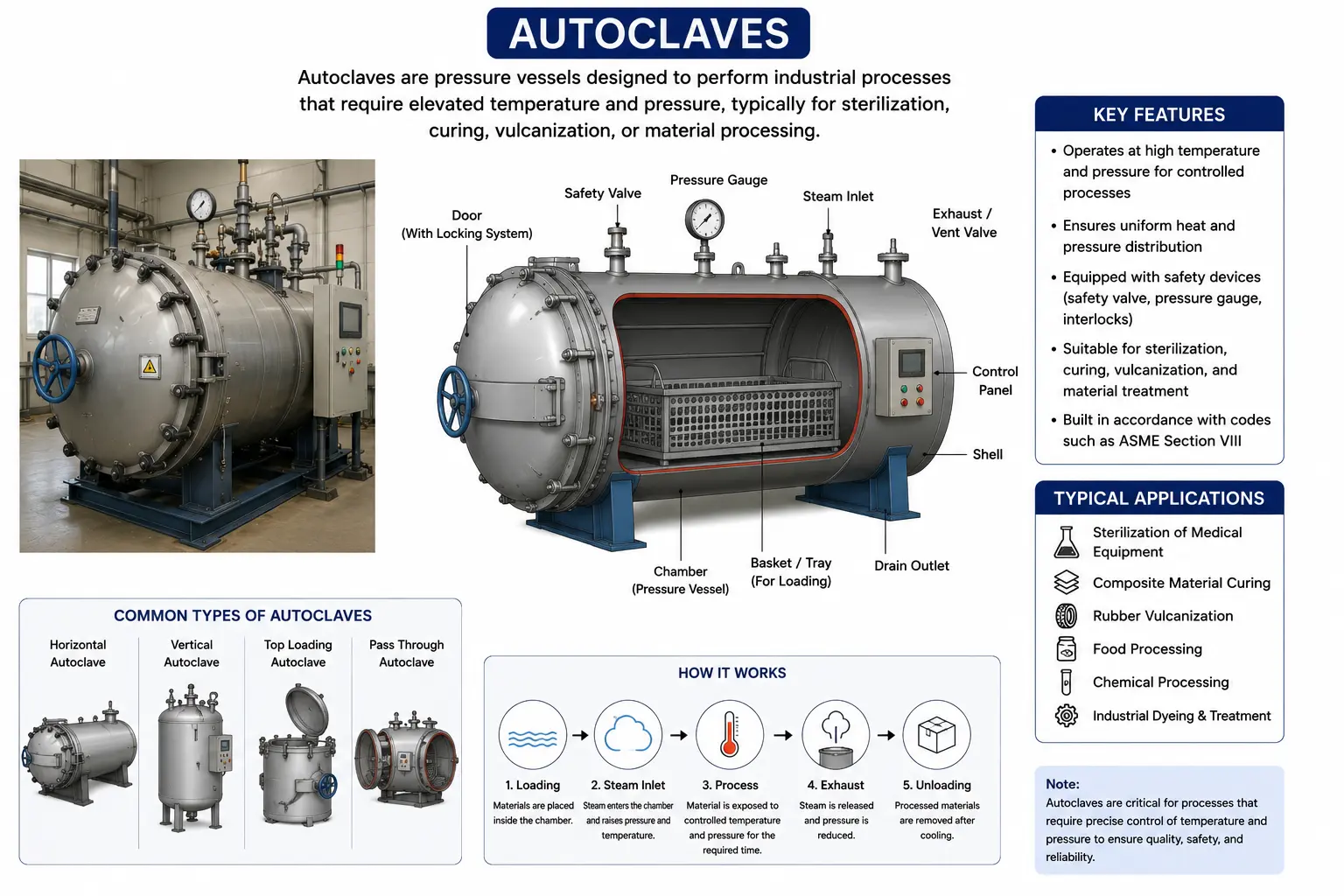 Autoclaves are pressure vessels that use a combination of high pressure and steam to sterilize equipment, cure composite materials, or carry out high-pressure chemical processes. They are designed to achieve temperatures and pressures well above the boiling point of water.
In healthcare and laboratories, autoclaves sterilize medical instruments and lab equipment. In aerospace and manufacturing, they are used to cure carbon fiber and composite materials that form structural components of aircraft and racing vehicles.
Autoclaves are used in hospitals and laboratories for sterilization, aerospace composite curing, food processing (retort sterilization), and rubber vulcanization.
7. Accumulators
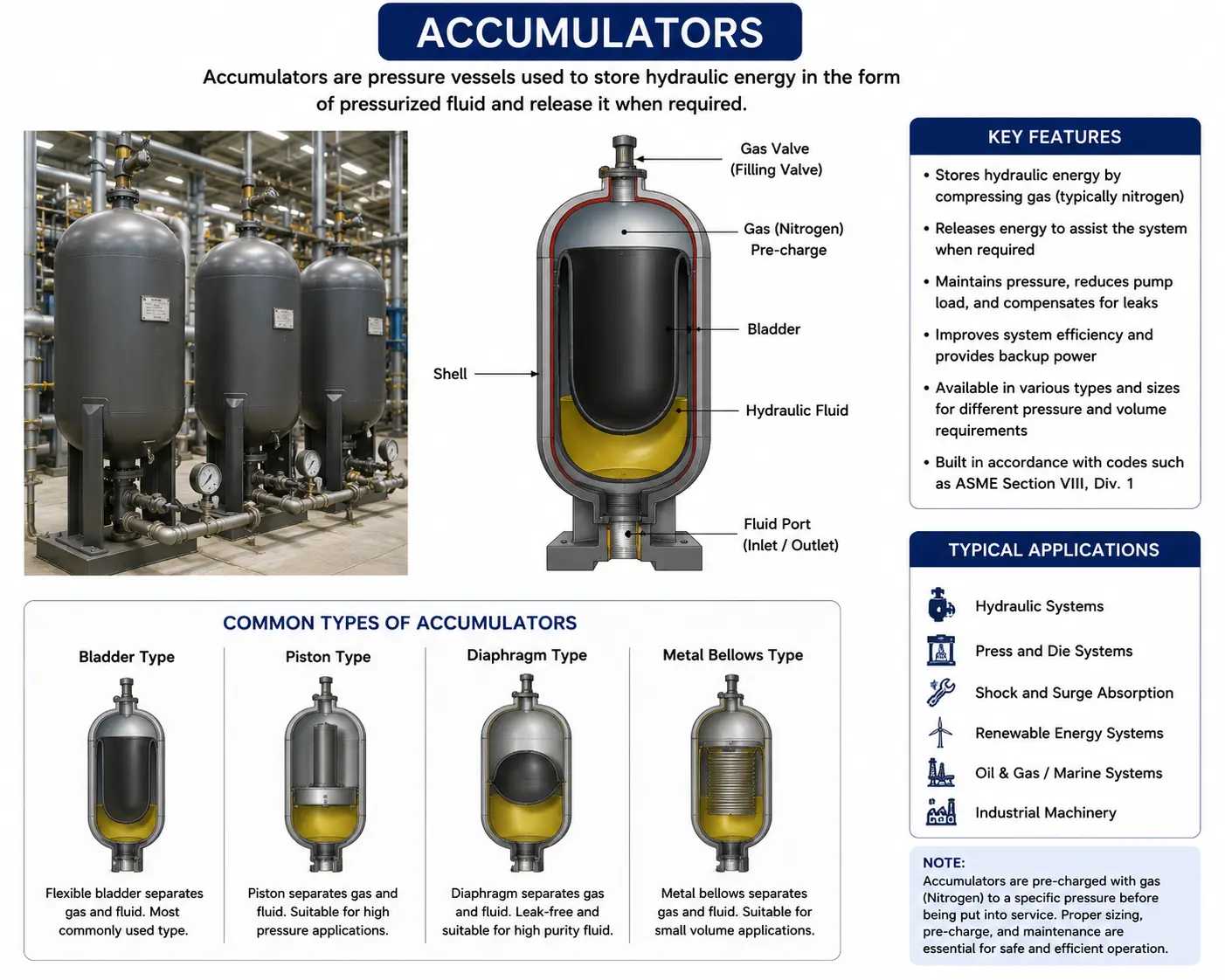 Accumulators are pressure vessels that store energy in the form of pressurized fluid. They absorb pressure surges (water hammer), maintain system pressure, and act as emergency energy reserves. They typically contain a gas (often nitrogen) on one side of a bladder or piston and hydraulic fluid on the other.
There are several types of accumulators including bladder, piston, diaphragm, and spring-loaded designs. Each is selected based on the required volume, pressure rating, and fluid compatibility.
Accumulators are used in hydraulic systems, oil & gas pipelines, water distribution systems, and offshore drilling equipment.
8. Separators
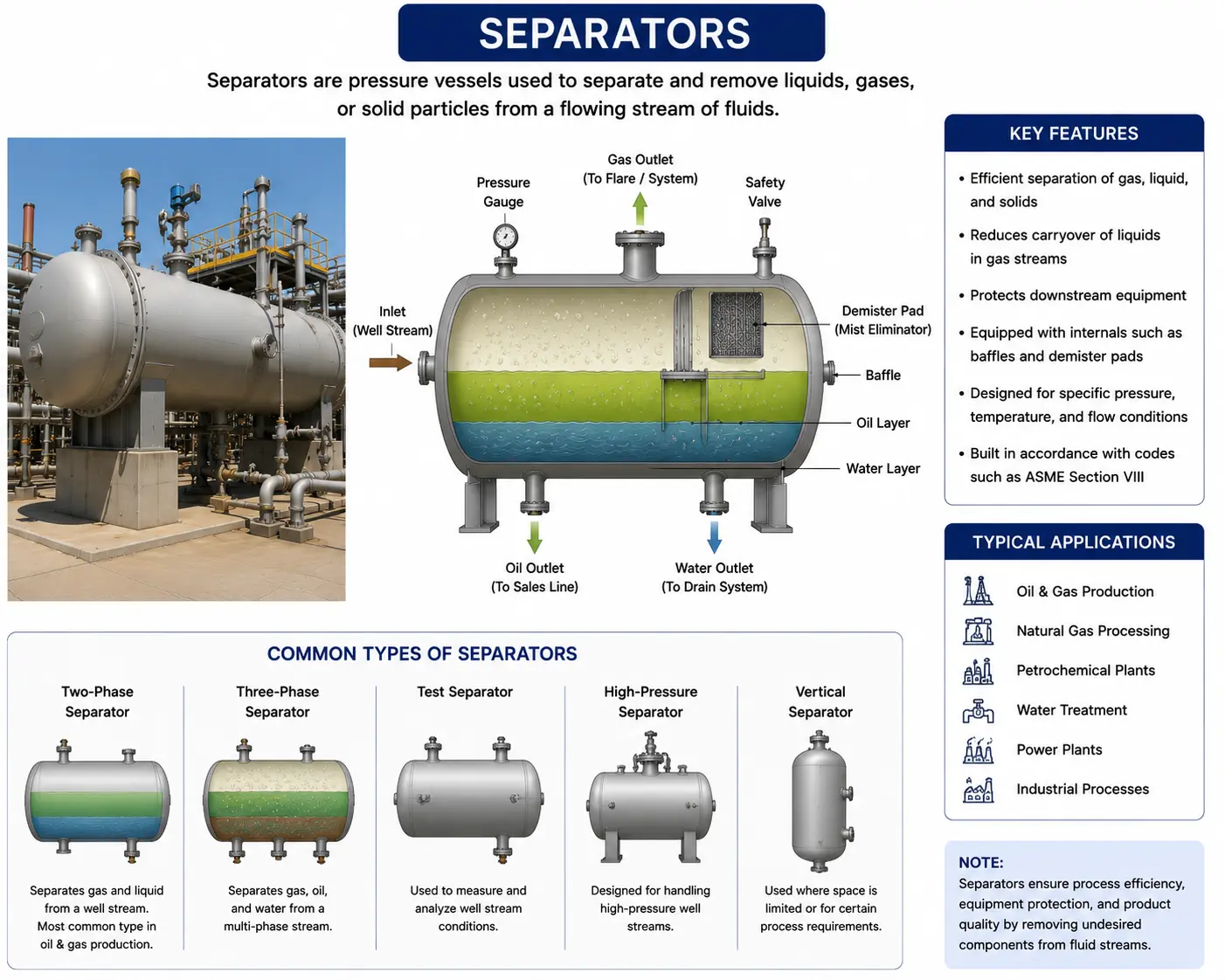 Separators are pressure vessels used to separate mixtures of fluids into their individual components. The most common application is the separation of oil, water, and gas in the petroleum industry. They exploit differences in density and phase to achieve separation under controlled pressure.
Separators can be two-phase (separating liquid from gas) or three-phase (separating oil, water, and gas simultaneously). They are oriented either horizontally or vertically depending on the gas-to-liquid ratio and space constraints.
Separators are widely deployed in oil & gas production facilities, natural gas processing plants, offshore platforms, and refinery operations.
9. Distillation Columns and Towers
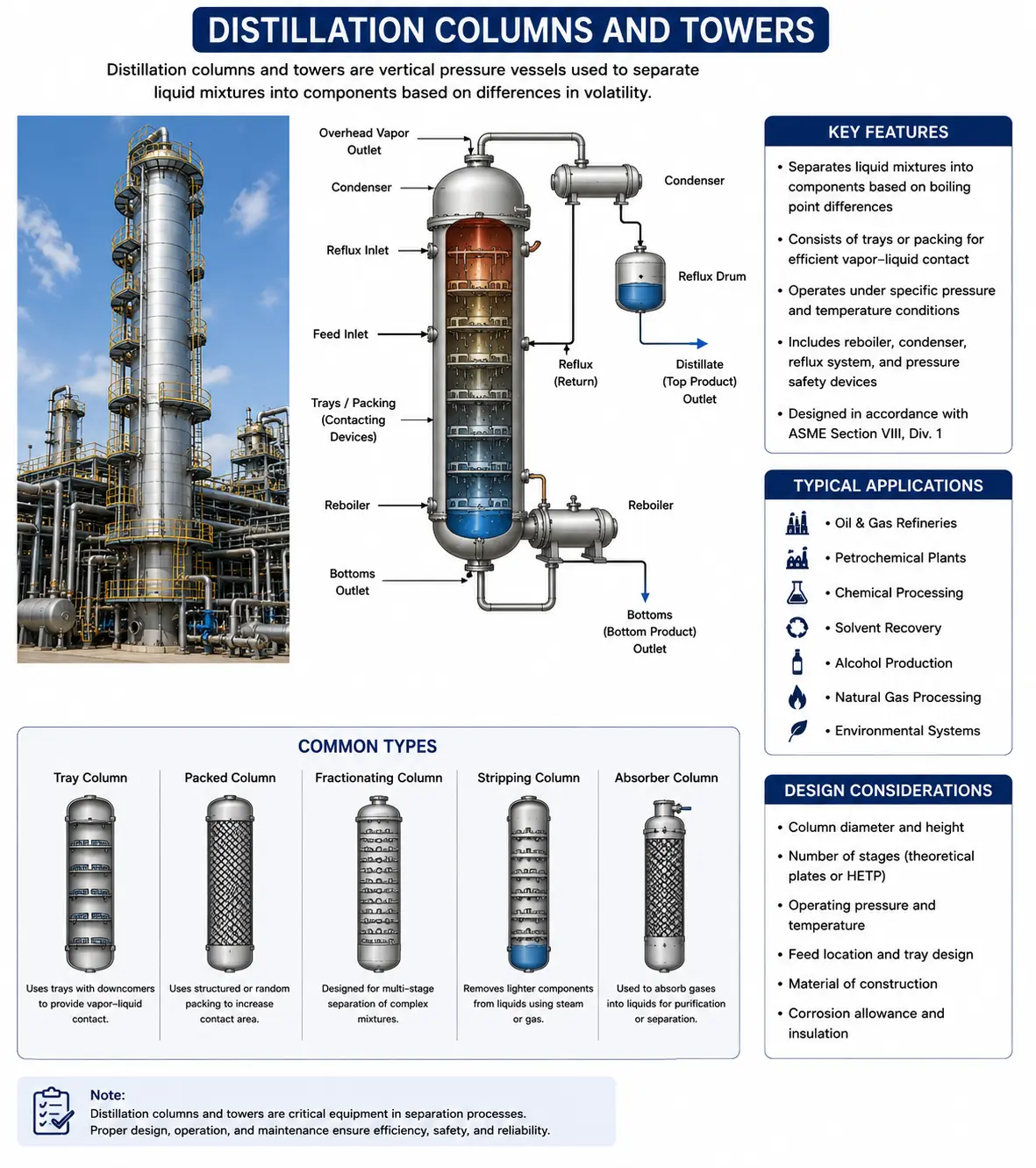 Distillation columns are tall, vertical pressure vessels used to separate mixtures based on differences in boiling points. They contain internal structures such as trays or packing to increase contact between rising vapors and descending liquid, enabling effective separation.
These vessels operate under carefully controlled pressure conditions — some under vacuum to lower boiling points, others under elevated pressure to handle gaseous feeds. Distillation columns are among the tallest and most visible structures in refinery and chemical plant complexes.
Distillation columns are used in petroleum refining, natural gas processing, alcohol production, chemical separation, and pharmaceutical purification.
10. Cryogenic Vessels
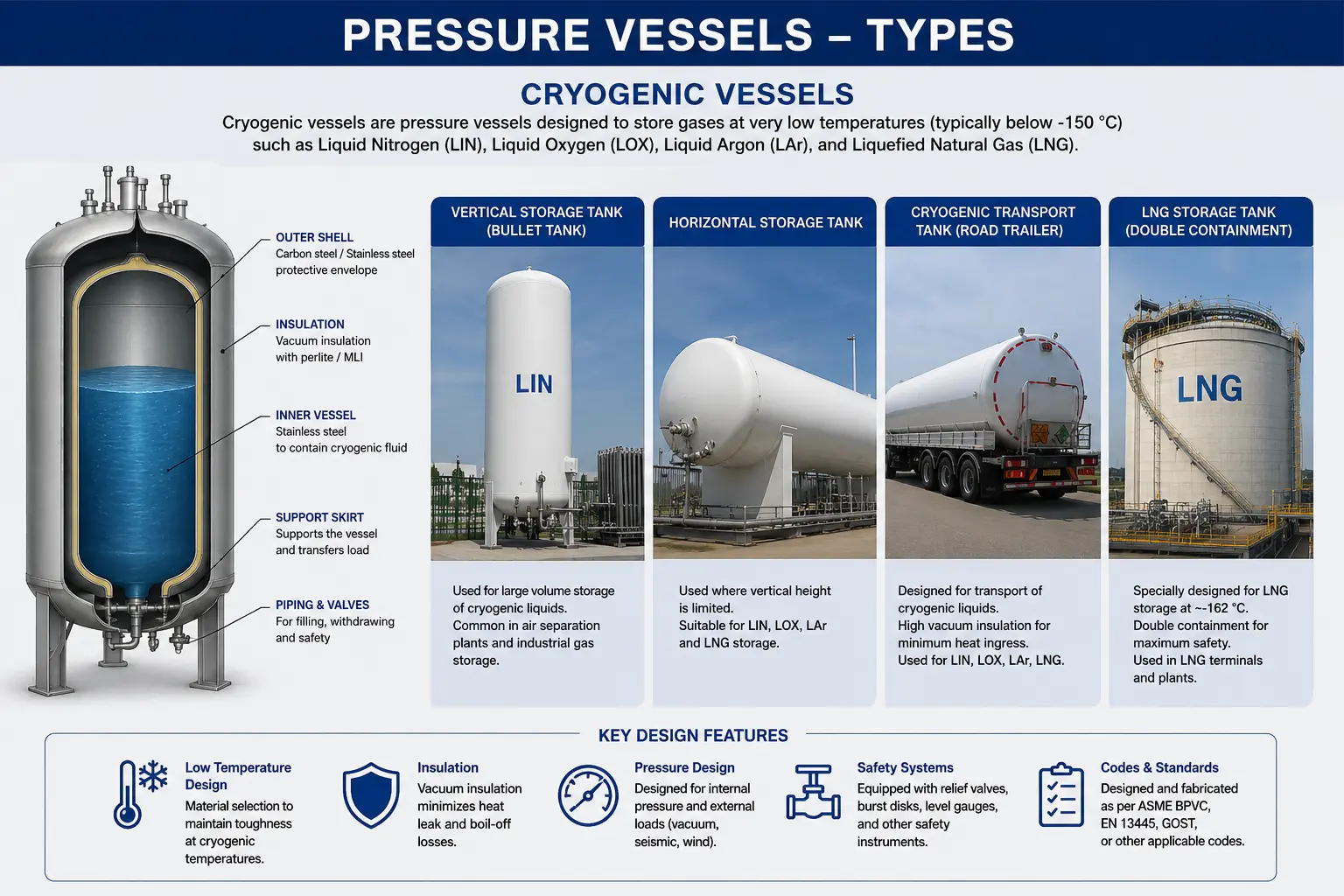 Cryogenic vessels are pressure vessels designed to store and transport substances at extremely low temperatures, typically below -150°C (-238°F). These vessels require special insulation systems — usually vacuum-jacketed (like a large thermos) — to maintain the cryogenic temperature and limit heat ingress.
They are constructed from materials like austenitic stainless steel or aluminum alloys that retain their toughness and ductility at extremely low temperatures, unlike carbon steel which becomes brittle.
Cryogenic vessels are used for storing liquefied gases like liquid nitrogen, liquid oxygen, liquid hydrogen, and liquefied natural gas (LNG) in medical, industrial, and energy applications.
11. Fired Pressure Vessels
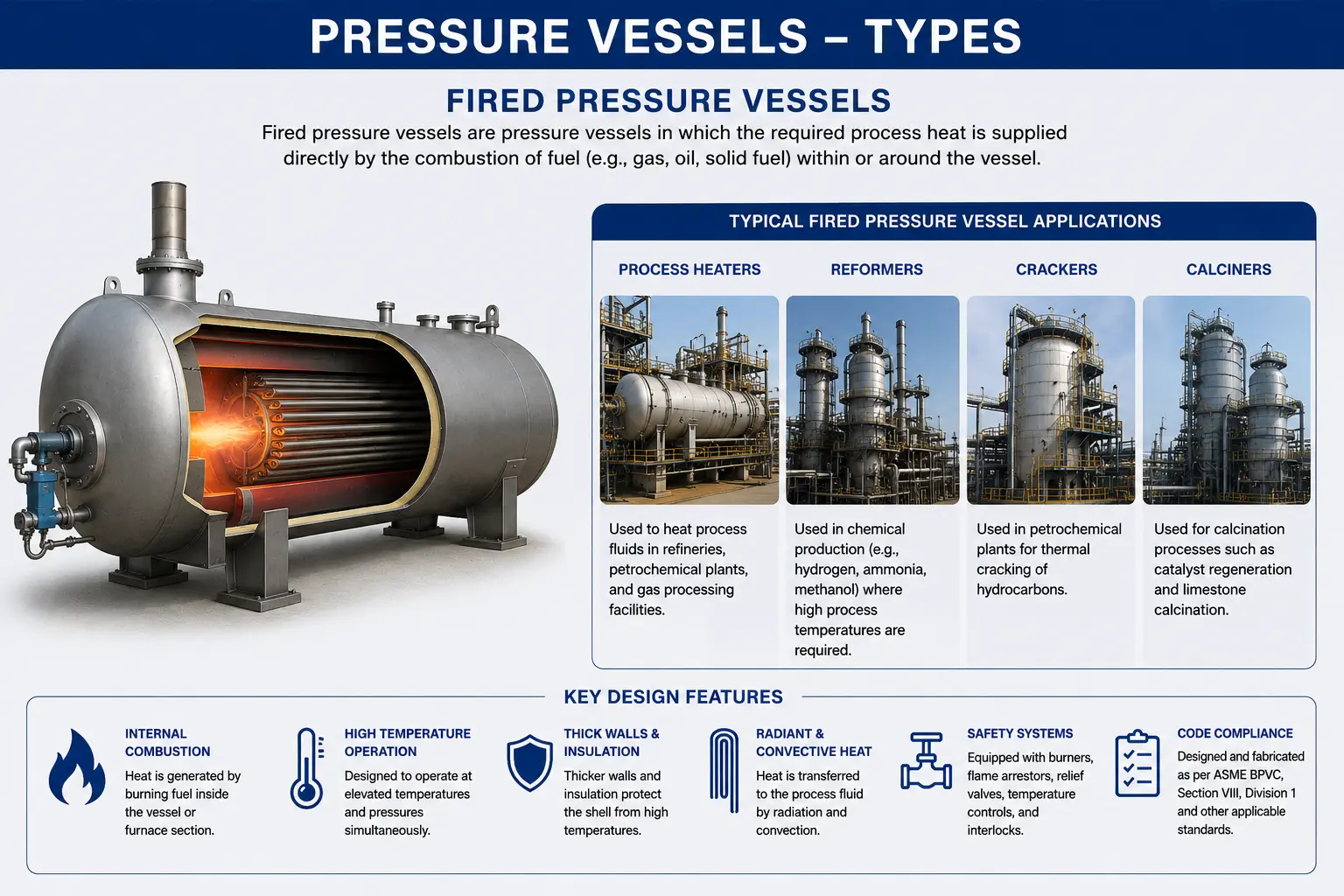 Fired pressure vessels are directly exposed to a flame or combustion source. Unlike unfired pressure vessels (which use external sources like steam or electricity for heating), fired pressure vessels generate their own heat internally. Boilers are the most common example, but fired heaters and furnaces also fall in this category.
These vessels demand strict compliance with fire safety and pressure codes. They are typically equipped with pressure relief valves, combustion controls, and safety interlocks to prevent dangerous over-pressure conditions.
Fired pressure vessels are used in power generation, industrial steam supply, crude oil heating, and chemical process heating.
12. Unfired Pressure Vessels
Unfired pressure vessels are those that do not involve direct combustion. They receive energy from external sources such as steam, electric heaters, or mechanical means. This broad category includes storage tanks, heat exchangers, accumulators, autoclaves (when steam-fed), and separators.Because there is no direct flame, unfired pressure vessels generally carry a lower risk profile than fired vessels. However, they are still governed by stringent pressure codes and regular inspection requirements.
Unfired pressure vessels are used across virtually all process industries: chemical plants, oil & gas, power generation, pharmaceuticals, and water treatment.
13. High-Pressure Vessels
High-pressure vessels are specifically engineered to operate at extreme pressures, typically above 1,000 psi (69 bar) and sometimes reaching tens of thousands of psi. Their walls are significantly thicker and fabricated from high-strength alloy steels to withstand the enormous stresses involved.One specialized application is high-pressure water jet cutting, where water is pressurized to over 60,000 psi in a vessel and then directed through a tiny nozzle to cut materials. Another is the food processing technology called High Pressure Processing (HPP), which destroys pathogens in food without heat.
High-pressure vessels are used in waterjet cutting systems, HPP food processing, polyethylene production, hydraulic presses, and deep-sea research equipment.
14. Spherical Pressure Vessels
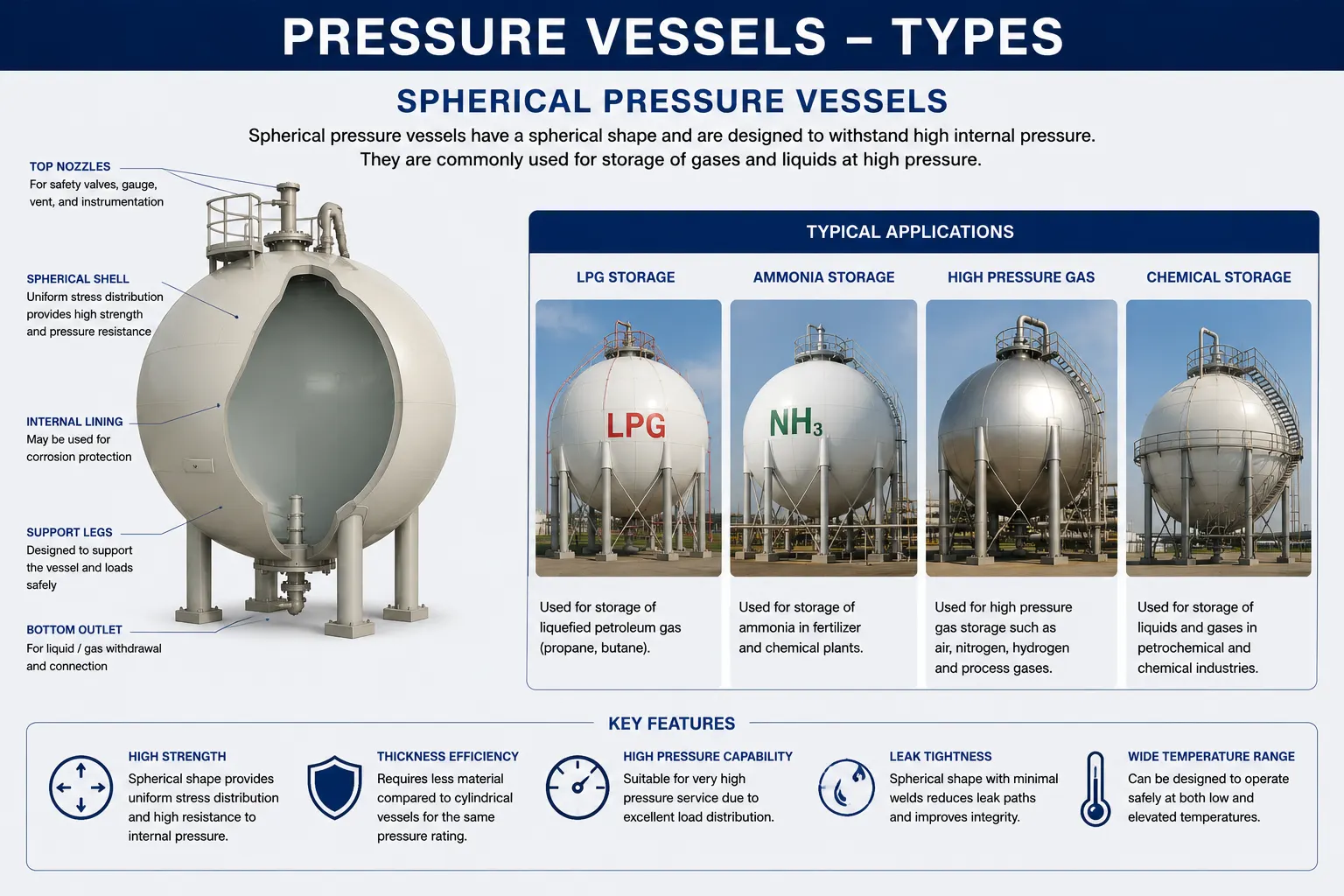 Spherical pressure vessels (also known as Horton spheres) are designed in a spherical shape, which is the most structurally efficient geometry for containing pressure. A sphere distributes stress evenly in all directions, allowing thinner walls compared to cylindrical vessels of the same volume and pressure rating.
Despite their higher fabrication cost, their material efficiency makes them economical for large-volume, high-pressure storage. They are instantly recognizable in industrial facilities as large metallic spheres elevated on structural legs.
Spherical pressure vessels are widely used for storing LPG (liquefied petroleum gas), butane, propylene, and other pressurized gases at refineries, chemical plants, and bulk storage terminals.
15. Cylindrical Pressure Vessels
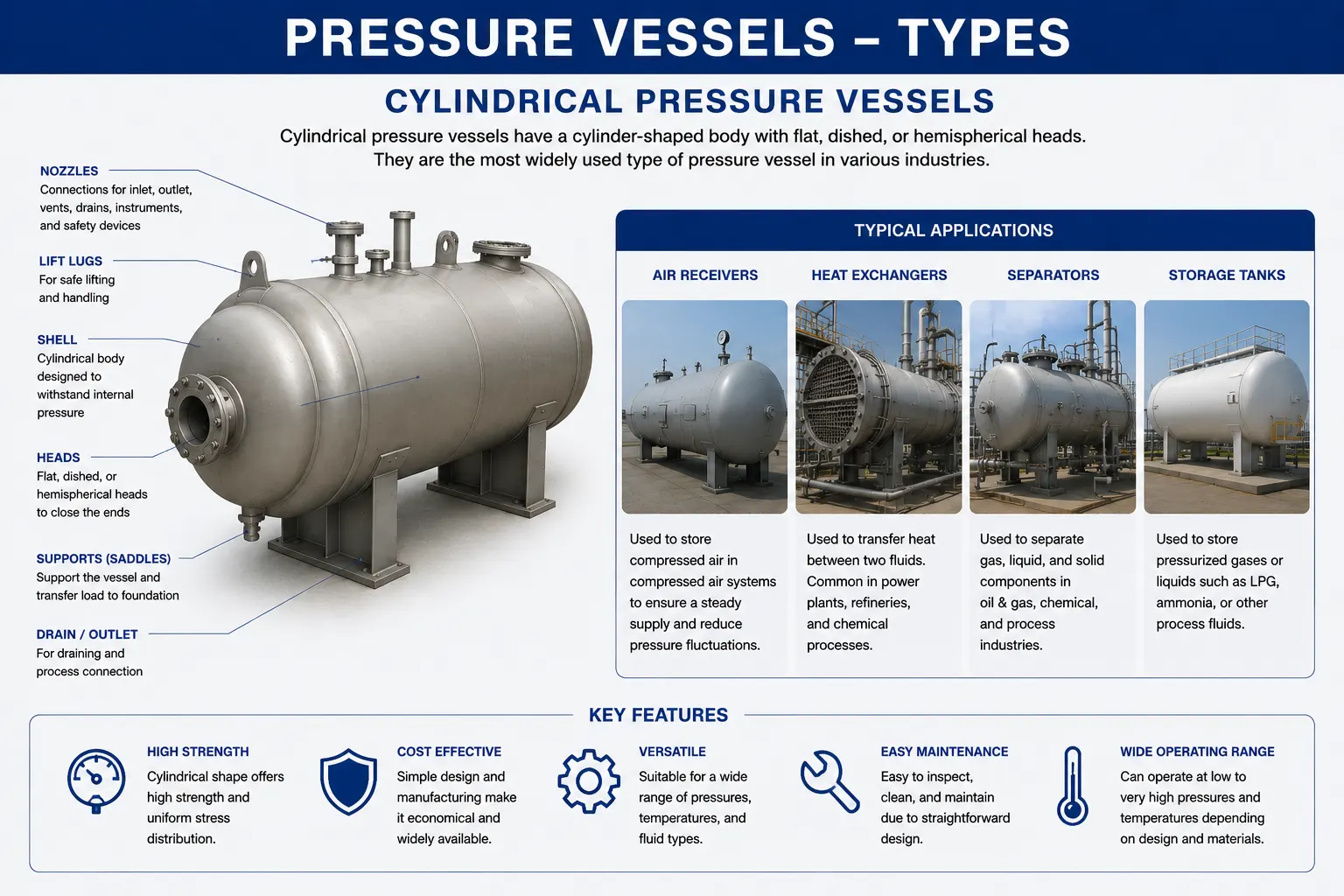 Cylindrical pressure vessels are the most widely manufactured type due to their ease of fabrication and versatility. They consist of a cylindrical shell with domed or flat end caps (heads). Cylinders can be oriented horizontally or vertically depending on the application and space available.
Vertical cylindrical vessels are often used for processes where gravity-assisted separation is needed, while horizontal vessels are preferred for liquid storage and heat exchangers. The cylindrical shape is efficient to manufacture using standard rolling and welding techniques.
Cylindrical pressure vessels are used in virtually every process industry for storage, heat exchange, separation, and reaction across chemical, oil & gas, pharmaceutical, and power sectors.
How to Identify the Types of Pressure Vessels
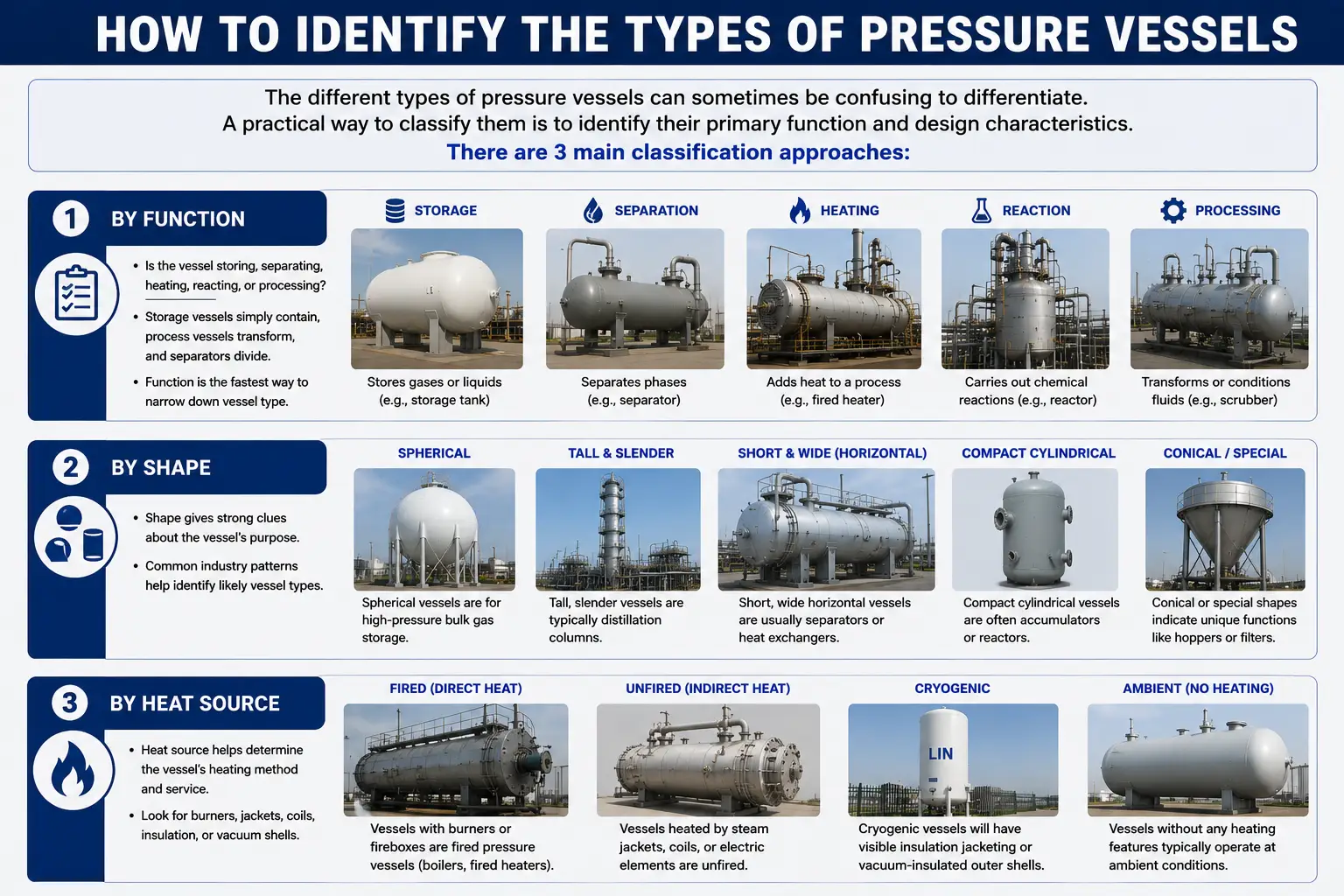 The different types of pressure vessels explained above can sometimes be confusing to differentiate. A practical way to classify them is to identify their primary function and design characteristics. There are 3 main classification approaches:
- By Function: Is the vessel storing, separating, heating, reacting, or processing? Storage vessels simply contain, process vessels transform, and separators divide. Function is the fastest way to narrow down vessel type.
- By Shape: Spherical vessels are for high-pressure bulk gas storage. Tall, slender vessels are typically distillation columns. Short, wide horizontal vessels are usually separators or heat exchangers. Compact cylindrical vessels are often accumulators or reactors.
- By Heat Source: Vessels with burners or fireboxes are fired pressure vessels (boilers, fired heaters). Vessels heated by steam jackets, coils, or electric elements are unfired. Cryogenic vessels will have visible insulation jacketing or vacuum-insulated outer shells.
What Types of Pressure Vessels are Suitable for Key Industries?
Among the various pressure vessel types discussed above, there are specific ones most suitable for each major industry:- Oil & Gas: Separators, storage vessels, spherical LPG tanks, and high-pressure reactor vessels are indispensable in upstream production, refining, and distribution.
- Chemical & Petrochemical: Reactor vessels, process vessels, distillation columns, heat exchanger vessels, and autoclaves are the backbone of chemical manufacturing.
- Power Generation: Boilers, fired pressure vessels, accumulators, and heat exchanger vessels are critical for steam generation and turbine operations.
- Pharmaceutical & Food: Autoclaves for sterilization, high-pressure vessels for HPP food processing, and process vessels for controlled reactions are widely used.
- Energy & LNG: Cryogenic vessels and spherical pressure vessels are essential for storing and transporting liquefied gases in the growing LNG and hydrogen energy sectors.
How to Choose the Right Pressure Vessel Type
These are the key factors you should keep in mind when choosing the right pressure vessel for your application:- Operating Pressure and Temperature: The maximum design pressure (MAWP) and temperature are the primary drivers of vessel design. Higher pressures demand thicker walls, stronger alloys, and more rigorous testing. Always factor in safety margins above normal operating conditions.
- Fluid Type and Properties: Consider the chemical nature of the fluid (corrosive, toxic, flammable), its phase (liquid, gas, two-phase), and its viscosity. Corrosive fluids require stainless steel or lined vessels. Cryogenic fluids require special low-temperature materials.
- Intended Function: Clearly define whether the vessel needs to store, react, separate, heat, or pressurize. Each function corresponds to a specific vessel design. Mismatching function to vessel type leads to inefficiency and safety risks.
- Size and Space Constraints: Available installation space influences the choice of vessel shape and orientation. Spherical vessels need more clearance but are more structurally efficient at large volumes. Cylindrical vessels fit into tighter spaces and are easier to support and anchor.
- Regulatory and Code Compliance: Pressure vessels must comply with applicable codes such as ASME Section VIII, PED (European Pressure Equipment Directive), or local equivalents. Ensure the vessel manufacturer holds the appropriate code stamps and certifications.
- Total Cost of Ownership: Consider not just the purchase price but also installation, inspection, maintenance, and potential downtime costs. A more robust, higher-quality vessel may cost more upfront but offers a longer service life and fewer safety incidents.
Conclusion
Pressure vessels are the critical backbone of virtually every process industry. From the simple compressed air receiver in a workshop to the massive distillation columns in a refinery, each type of pressure vessel is engineered to perform a specific function safely and efficiently under demanding conditions.Understanding the types of pressure vessels — storage, heat exchanger, process, reactor, boiler, autoclave, accumulator, separator, distillation column, cryogenic, fired, unfired, high-pressure, spherical, and cylindrical — is the first step toward selecting the right equipment for your operation.
When choosing a pressure vessel, always consider the operating conditions, fluid properties, functional requirements, space constraints, regulatory compliance, and total cost of ownership. Consulting with a qualified pressure vessel manufacturer or engineer will ensure you select the safest and most efficient solution for your application.


