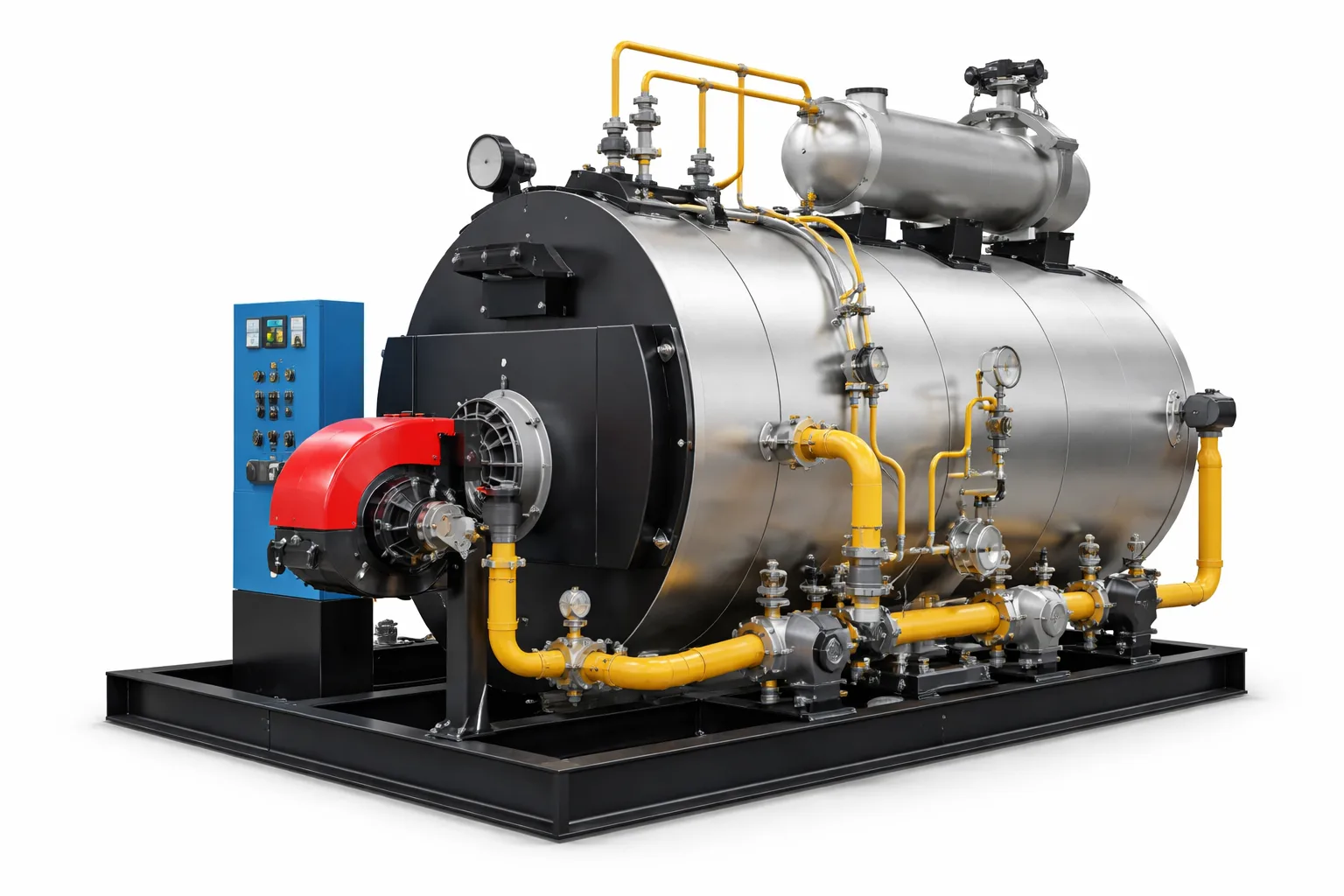
What is a Thermal Oil Heater?
A thermic oil heater (or thermic fluid heater) is a closed-loop industrial heating system that uses specialized thermal oil to transfer high, precise temperatures (up to 300°C–400°C) at low operating pressures.
How It Works
- Heat Generation: A burner burns fuel (gas, oil, or biomass) or uses electric elements to heat the thermal oil inside a combustion chamber.
- Circulation: A high-temperature pump moves the hot oil through a closed-loop system of coils and pipes.
- Heat Transfer: The fluid delivers indirect heat to industrial equipment like reactors, dryers, or presses without boiling or evaporating.
- Return: The cooled oil returns to the heater to be reheated and recycled continuously.
Key Benefits
- Low Pressure: Operates safely at high temperatures without the extreme pressure and strict regulatory oversight of steam boilers.
- Efficiency: Modern multi-pass and air-preheater designs achieve thermal efficiencies between 88% and 93%.
- Fuel Flexibility: Runs on diverse energy sources including diesel, furnace oil, natural gas, biomass, or electricity
As a leading manufacturer in India, we design and supply high-efficiency
thermal oil heaters engineered for reliability, energy savings, and long service life. In large industrial facilities, heating systems often operate alongside steam circuits that incorporate a
surface condenser to manage vapor condensation and maintain overall thermal efficiency Our systems are suitable for continuous industrial operation across various sectors including chemical, textile, food processing, oil & gas, and pharmaceuticals.
Request a Quote
Technical Specifications – United Cooling Systems Pvt. Ltd.
| Parameter |
Specification |
| Company Name |
United Cooling Systems Pvt. Ltd. |
| Temperature Range |
Up to 350°C |
| Fuel Options |
Diesel, Gas, FO (Furnace Oil), LDO, Biomass |
| Efficiency |
Up to 90% |
| Capacity |
50,000 kcal/hr to 50,00,000 kcal/hr |
| Design Codes |
As per International Standards |
| Safety Features |
Expansion Tank, Safety Valve, Temperature Controller, Flame Failure Protection |
Working Principle of Thermal Oil Heater
The working principle is simple and efficient:
- Fuel (gas, diesel, furnace oil, or biomass) burns in the combustion chamber.
- Heat is transferred to the coil carrying thermal oil.
- The heated oil circulates through the process system.
- After transferring heat, oil returns to the heater for reheating.
Because the system is closed loop, there is minimal heat loss and no scaling problems common in steam systems.
Types of Thermal Oil Heaters
1. Vertical Coil Type Heater
- Compact design
- Ideal for small space installation
- Easy maintenance
2. Horizontal Thermal Oil Heater
- High capacity
- Better heat distribution
- Suitable for large industries
3. Solid Fuel Fired Heater
- Uses coal, wood, briquettes, agro waste
- Lower fuel cost
- Ideal for manufacturing plants
Advantages of Thermal Oil Heater Over Steam Boiler
| Feature |
Thermal Oil Heater |
Steam Boiler |
| Operating Pressure |
Low |
High |
| Temperature |
High (up to 350°C) |
Limited |
| Maintenance |
Low |
Higher |
| Scaling |
No Scaling |
Scaling Issues |
| Efficiency |
Higher |
Moderate |
Because of low pressure operation, thermic fluid systems are safer and require less regulatory compliance.
Applications of Thermal Oil Heater
Thermal oil heaters are widely used in:
- Chemical processing plants
- Textile dyeing units
- Food processing industries
- Pharmaceutical manufacturing
- Bitumen heating
- Oil & gas industries
- Rubber and plastic processing
Industries requiring continuous, uniform heating prefer thermal oil heating systems.
Why Choose Our Thermal Oil Heater?
- Custom-designed systems
- Energy-efficient combustion
- Advanced control panels
- Durable heat transfer coils
- Minimal maintenance
- Fast delivery across India
We focus on performance, durability, and long operational life.
Design Considerations
When selecting a thermal oil heater, consider:
- Required process temperature
- Heat load calculation
- Fuel availability
- Space for installation
- Pump capacity
- Expansion tank design
Proper design ensures maximum thermal efficiency and safety.
Safety Features
Modern thermal oil heaters include:
- High temperature cut-off
- Low oil level protection
- Pressure monitoring
- Flame failure detection
- Emergency shutdown system
These safety systems ensure uninterrupted and secure plant operation.
Maintenance Tips
To maintain optimal performance:
- Regularly check thermal oil quality
- Inspect burner system
- Clean heat transfer coils
- Monitor pump alignment
- Check expansion tank level
Proper maintenance increases equipment lifespan.
Frequently Asked Questions (FAQ)
What temperature can a thermal oil heater achieve?
Thermal oil heaters can operate up to 300°C–350°C depending on design.
What is the difference between thermic fluid heater and steam boiler?
A thermic fluid heater operates at low pressure and uses oil as heat transfer medium, while steam boilers use water under high pressure.
Is thermal oil heater energy efficient?
Yes, it offers high efficiency with minimal heat loss.
What fuel can be used?
Diesel, natural gas, furnace oil, biomass, coal, and briquettes.
Conclusion
A
thermal oil heater is the most reliable and efficient industrial heating solution for high temperature applications. With low pressure operation, high thermal efficiency, and reduced maintenance requirements, thermic fluid heaters provide safe and consistent heating for a wide range of industries.
If you are looking for a trusted thermal oil heater manufacturer in India, choose a company that offers customized design, superior engineering, and long-term service support.