

21-10-2026
Air Heater - Complete Overview
1. What Is an Air Heater?
Air heaters (blower or fan room heaters) quickly warm small-to-medium indoor spaces by pulling in cool air, passing it over an electric heating element, and pushing out warm air using a built-in fanCommon Types of Air Heaters
- Fan / Blower Heaters: Use a fan and a heating coil to deliver fast, targeted warmth; best for small rooms.
- Quartz / Radiant Heaters: Use glowing tubes to warm people and objects directly via heat radiation rather than blowing air.
- Oil-Filled Radiators (OFR): Heat internal oil reservoirs for slow, silent, and sustained warmth in bedrooms.
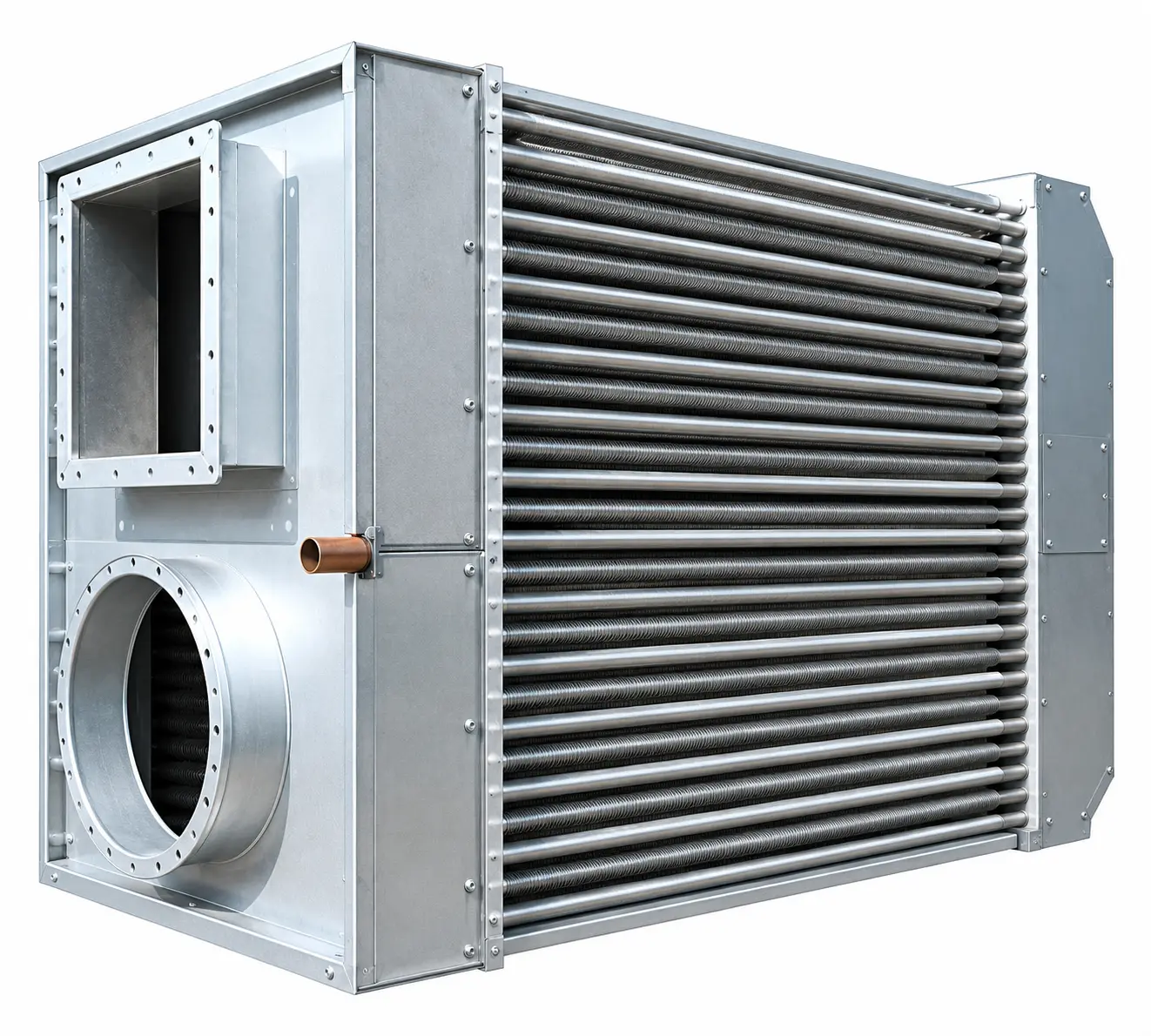
- Industrial & Oil/Gas Air Heaters: Heavy-duty units running on electricity, diesel, or gas for large halls or job sites.
Key Features to Consider
- Power Settings: Most standard home units offer dual modes (typically 1000W and 2000W) to balance warmth and electricity use.
- Safety Controls: Look for built-in features like automatic thermal cut-outs, tip-over protection, and cool-touch outer bodies.
- Portability: Lightweight builds with integrated carry handles let you move the unit easily from room to room
Air heater, room heater, fan heater: what is the difference?
These terms overlap, and most people use them interchangeably.| Term | Typical Meaning |
|---|---|
| Air heater | Any device that heats air, domestic or industrial. |
| Room heater | Any heater meant to warm a room, including radiant and oil-filled types. |
| Fan heater | An air heater that uses a fan to push air across the element. |
| Blower heater | A high-airflow heater, often used on sites, in garages and in industry. |
| Convector heater | A heater that relies on natural air circulation, with no fan. |
Where air heaters are used
- Homes: bedrooms, living rooms, bathrooms, study rooms, nurseries
- Commercial spaces: offices, shops, clinics, salons, reception areas
- Agriculture: greenhouses, poultry and livestock sheds, grain drying
- Industry: drying ovens, paint booths, plastic processing, food processing, textile and paper drying, pharmaceutical drying
- Construction and events: curing concrete, drying plaster, heating tents and temporary structures
- Energy systems: combustion air preheating in boilers and furnaces
How Heat and Air Behave
Understanding the basics helps you choose, size and use a heater correctly.Three ways heat moves
| Mechanism | Explanation | Where You See It |
|---|---|---|
| Conduction | Heat flows through direct contact. | Element warming its metal sheath; ceramic plate warming nearby air. |
| Convection | Heat travels with moving air. | Fan heaters, convectors, duct heaters, whole-room warming. |
| Radiation | Infrared waves warm solid objects and people directly, without warming the air first. | Quartz, halogen and carbon heaters; sunlight. |
Forced convection (a fan pushes the air) heats a room quickly. Natural convection (warm air rises, cool air sinks) is silent but slower. Radiation gives the fastest sense of warmth but only where the rays fall.
Why air is hard to heat
Air has a low density and low heat capacity. A cubic metre of air holds only about 1.2 kJ per °C. Heating a leaky room is like filling a bucket with a hole in it: the heater keeps adding warmth while the walls, windows, floor and gaps keep releasing it.Heat loss depends on:
- Insulation of walls, roof and windows
- Air leaks around doors and windows
- Ceiling height and room volume
- Outdoor temperature
- Floor type (tile and marble feel colder than wood or carpet)
- Number of exposed external walls
Heating power formula
Power (kW) ≈ Air volume (m³/h) × Temperature rise (°C) × 0.00033This comes from air’s heat capacity (about 1.2 kJ/m³·°C) divided by 3,600 seconds per hour.
Worked examples
| Air Flow | Temperature Rise | Power Needed (Before Safety Margin) |
|---|---|---|
| 500 m³/h | 20 °C | About 3.3 kW |
| 1,000 m³/h | 30 °C | About 10 kW |
| 2,000 m³/h | 40 °C | About 26.4 kW |
| 5,000 m³/h | 25 °C | About 41 kW |
Add 10 to 25% for duct losses, start-up and ageing of elements.
Efficiency: the truth about “efficient” heaters
Resistive electric heaters (fan, ceramic, oil-filled, halogen, convector) convert almost 100% of the electricity they draw into heat. A 2,000 W heater produces about 2 kW of heat regardless of type.What differs is how that heat is delivered: speed, evenness, noise, humidity and controllability.
Heat pumps do not generate heat from electricity. They move heat from outside air to inside. Their COP (coefficient of performance) is typically 2.5 to 4, meaning 1 kWh of electricity can deliver 2.5 to 4 kWh of heat. Performance drops as outdoor temperatures fall, so check the rated operating range.
Fuel-burning heaters depend on the fuel’s price and combustion efficiency.
How an Air Heater Works
Step-by-step working of an electric air heater
- Power on: current flows into the heater through the switch and thermostat.
- Resistance heating: current passes through a high-resistance element (nichrome wire, a PTC ceramic plate, or a quartz tube), which heats up.
- Airflow: a fan draws cool room air in from the back or bottom.
- Heat transfer: the air passes over the hot element and absorbs heat.
- Distribution: warm air exits through the front grille, and many models oscillate to spread it.
- Temperature control: a thermostat senses room or air temperature and cycles the element off at the set point and back on when the temperature drops.
- Protection: a thermal fuse or cut-off disconnects power on overheating, and a tip-over switch cuts power if the unit falls.
Working of other air heater types
| Type | Working Principle |
|---|---|
| Oil-filled | Element heats sealed thermal oil, which heats the metal fins, which radiate and convect heat. |
| Halogen / quartz | A tungsten or resistance filament glows and emits infrared that warms what it hits. |
| PTC ceramic | Ceramic stones increase resistance as they heat, so power self-limits and temperature stabilises. |
| Gas / LPG | A burner combusts fuel and a heat exchanger or open flame warms the air. |
| Heat pump | Refrigerant absorbs heat outdoors, a compressor raises its temperature, and an indoor coil releases it into the room. |
| Duct heater | Elements sit inside the air duct; HVAC fans push air across them. |
| Steam / hot-water coil | Hot fluid runs through finned coils and air passes over the fins. |
Inside an Air Heater: Components in Detail
| Component | What It Does | What to Look For |
|---|---|---|
| Heating element | Converts electrical energy into heat. | Nichrome wire for durability, PTC ceramic for self-regulation, quartz for fast radiant heat. |
| Fan / blower motor | Moves air across the element. | Quiet motor, quality bearings, balanced blades. |
| Thermostat | Maintains set temperature. | Adjustable dial or digital controller. |
| Thermal fuse / cut-off | Provides one-time or resettable protection against overheating. | Present on every reputable model. |
| Tip-over switch | Cuts power if the heater falls. | Essential in households with children and pets. |
| Selector switch | Chooses heat level and fan-only mode. | Multiple stages, such as 1,000 W and 2,000 W. |
| Power cord and plug | Carries current. | Thick, heat-resistant cable with a properly rated plug. |
| Housing and grille | Protects users and shapes airflow. | Flame-retardant plastic or powder-coated metal, narrow grille gaps. |
| Control panel / remote | Provides the user interface. | Digital display, timer, remote for convenience. |
| Indicator lights | Show power and heating status. | Clear, visible lights. |
| Filter (some models) | Traps dust before it reaches the element. | Washable filters reduce burning smell. |
Types of Air Heaters (In Depth)
Fan Heater
How it works: a fan blows air across a coil or ceramic plate.Typical power: 1,000 to 2,500 W.
Pros
- Heats a small room within minutes
- Light, compact and portable
- Low purchase price
- Many models double as a fan in summer
Cons
- Can be loud
- Dries the air
- Stops warming the moment it is switched off
- May produce a dusty smell when first used each season
Best for: bathrooms (if rated), small bedrooms, study desks, quick warm-ups.
Ceramic (PTC) Heater
How it works: PTC ceramic stones heat up and their resistance rises with temperature, which limits current and keeps the element from overheating.Typical power: 800 to 2,000 W.
Pros
- Inherent safety, since the element regulates itself
- Fast heating and reasonably quiet
- Compact with tight temperature control
- Surface of the grille stays comparatively cooler
Cons
- Costs more than a basic coil heater
- Heats a limited area on lower-power models
Best for: bedrooms, nurseries, home offices, small shops.
Oil-Filled Radiator (OFR)
How it works: an element heats oil sealed inside fins; the oil’s thermal mass keeps the radiator warm.Typical power: 800 to 2,500 W, often with 7, 9, 11 or 13 fins.
Pros
- Completely silent
- Keeps radiating heat after the thermostat cycles off
- Gentler on indoor humidity than fan heaters
- Even, comfortable warmth
Cons
- Slow to warm up
- Heavy (wheels help)
- Surface gets hot enough to burn, so it needs a clear zone
Best for: overnight heating in bedrooms, living rooms, long-duration use.
Halogen and Quartz (Radiant) Heater
How it works: a glowing filament emits infrared that heats people and objects directly.Typical power: 400 to 1,200 W.
Pros
- Instant warmth, no warm-up wait
- Silent
- Efficient for a single person at a desk or sofa
Cons
- Heats only what is in front of it
- Visible glow and very hot surfaces: a fire risk near fabrics
- Poor at warming the whole room
Best for: spot heating, workshops, study tables, short-term use.
Convector Heater
How it works: cool air enters from the bottom, passes the element and rises out of the top vents. Some models add a small fan (turbo mode).Typical power: 1,000 to 2,500 W.
Pros
- Quiet
- Even room warming
- Slimmer profile, often wall-mountable
Cons
- Slower than a fan heater
- Not ideal for very large or draughty spaces
Best for: living rooms, hallways, offices, long-duration heating.
Blower and Industrial Air Heater
How it works: high-capacity elements or burners with powerful fans deliver large volumes of hot air.Typical power: 3 kW to several hundred kW (electric), or very high capacities for gas-fired units.
Pros
- Heats large volumes quickly
- Rugged construction
- Can be ducted to direct the hot air where it is needed
Cons
- High energy use and noise
- Needs proper wiring (often three-phase)
- Requires trained installation
Best for: warehouses, workshops, construction drying, poultry houses, agricultural drying.
Gas, LPG and Kerosene Heaters
How it works: fuel is burned to produce heat, with or without a heat exchanger and flue.Pros
- Useful where electricity is unavailable or unreliable
- High heat output
Cons
- Combustion consumes oxygen and can produce carbon monoxide (CO)
- Needs ventilation; unvented models should not be used in closed bedrooms
- Fuel handling and storage risks
Best for: outdoor, semi-open or well-ventilated spaces, with a CO detector installed.
Heat Pump (Air-to-Air) Heaters
How it works: a refrigeration cycle moves heat from outdoor air to the indoors. Many inverter air conditioners can run in heating mode if they are a heat-pump model; not all room ACs have heating mode, so check the specification.Pros
- Lowest running cost per unit of heat
- Also cools in summer (reversible models)
- Consistent, controlled comfort
Cons
- Higher purchase and installation cost
- Heating capacity falls in very cold outdoor conditions
- Needs outdoor unit space and professional installation
Best for: regular, long-hour heating in colder regions, and homes already planning to install an AC.
Quick Comparison Table
| Type | Heat-up Speed | Noise | Humidity Effect | Portability | Best Use |
|---|---|---|---|---|---|
| Fan heater | Very fast | Medium to high | Dries air | Excellent | Short use, small rooms |
| PTC ceramic | Fast | Low to medium | Mild drying | Excellent | Bedrooms, offices |
| Oil-filled | Slow | Silent | Least drying | Good (heavy) | Overnight, steady heat |
| Halogen / quartz | Instant (spot) | Silent | Minimal | Excellent | Spot warmth |
| Convector | Slow to medium | Silent | Mild drying | Good | Living rooms |
| Blower (industrial) | Fast | High | Dries air | Moderate | Large spaces |
| Gas / LPG | Fast | Low | Adds moisture and CO₂ | Moderate | Ventilated spaces |
| Heat pump | Medium | Low | Mild | Fixed | Frequent, long use |
Industrial Air Heaters
What are industrial air heaters?
Industrial air heaters are engineered to heat large volumes of air or process gases continuously, at set temperatures, for manufacturing and processing tasks. They are sized by airflow, temperature rise, final outlet temperature and power or fuel input.Main types
| Type | Description | Typical Use |
|---|---|---|
| Electric duct heater | Finned or open-coil elements mounted in a duct section. | HVAC reheat, ventilation heating, drying air. |
| Electric process air heater | Insulated unit with a blower, heating chamber and controls. | Ovens, curing, drying lines. |
| Circulation heater | Elements in a vessel through which air or gas circulates. | Closed-loop processes, gases at pressure. |
| Open-coil heater | Exposed resistance wire for rapid response. | Clean-air, lower-temperature applications. |
| Finned tubular heater | Sheathed elements with fins for large surface area. | Dust-prone, rugged environments. |
| Direct-fired gas heater | Burner heats air directly, mixing combustion products with it. | Space heating where combustion gases are acceptable. |
| Indirect-fired gas heater | A heat exchanger keeps combustion gases separate. | Food, pharma, clean drying. |
| Steam / hot-water air heater | Finned coils fed by a boiler. | Plants with existing steam supply. |
| Thermic fluid air heater | Heated oil circulates through coils. | High-temperature drying. |
| Air preheater (boilers) | Recovers flue gas heat to warm combustion air. | Boilers, furnaces. |
Applications by industry
| Industry | Application |
|---|---|
| Food processing | Dehydration, roasting, baking, drying of grains, spices and snacks. |
| Textile | Fabric drying, stenter machines, heat-setting. |
| Paper and packaging | Drying coatings and inks. |
| Pharmaceutical | Tray dryers, fluid-bed dryers, clean-air drying. |
| Chemical | Powder drying, reactor heating, gas heating. |
| Automotive | Paint curing, powder coating, parts drying. |
| Plastics and rubber | Resin drying, vulcanising, moulding. |
| Agriculture | Poultry and livestock houses, greenhouses, crop drying. |
| Construction | Drying plaster, curing concrete, temporary heating. |
| Power / energy | Combustion air preheating. |
Sizing an industrial air heater
Step 1: Define the airflow in m³/h (or CFM).Step 2: Define the temperature rise: (required outlet temperature) minus (inlet air temperature).
Step 3: Apply the formula:
kW = m³/h × ΔT × 0.00033
Step 4: Add 10 to 25% for losses and ageing.
Step 5: Choose voltage and phase (single-phase for small units, three-phase for larger ones).
Step 6: Check the watt density (watts per square inch or cm² of element surface) so elements do not overheat in low airflow.
Step 7: Select controls: thermostat, PID controller, SCR/solid-state relay, airflow switch, high-limit cut-out.
Industrial selection checklist
- Required air volume and temperature
- Maximum operating temperature of materials
- Clean air vs dirty or dusty air
- Hazardous area rating (explosion-proof requirements where solvents or gases are present)
- Control accuracy needed (on/off vs PID)
- Fuel or power availability
- Compliance with local electrical and safety standards
- Maintenance access and spare element availability
Air Heater vs Other Heating Options
| Feature | Air Heater (Electric) | Heat Pump / AC Heating | Central Heating | Radiant Heater | Gas Heater |
|---|---|---|---|---|---|
| Upfront Cost | Low | High | Very high | Low | Low to medium |
| Running Cost | Medium to high | Low to medium | Medium | Medium | Varies by fuel |
| Heating Speed | Fast | Medium | Slow | Instant (spot) | Fast |
| Portability | Yes | No | No | Yes | Often |
| Installation | None | Professional | Professional | None | Varies |
| Safety Concerns | Moderate | Low | Low | Higher | CO and fire risk |
| Best For | Single rooms | Whole-room regular use | Whole buildings | Spot warmth | Ventilated or outdoor areas |
How to Choose the Right Air Heater
Step 1: Know your space
Measure floor area and ceiling height, and note:- Number of windows and external walls
- Glass area and whether windows are single or double glazed
- Floor type
- Whether the room has air leaks
Step 2: Pick the heater type by use case
| Situation | Recommended Type |
|---|---|
| Small bedroom, light sleepers | Oil-filled or PTC ceramic |
| Quick warm-up in a bathroom | Fan heater (bathroom-rated) |
| Study table, desk, workshop bench | Halogen or quartz |
| Large living room, long hours | Convector, oil-filled or heat pump |
| Baby or elderly room | PTC ceramic or oil-filled with a safe-touch design |
| Garage, shop, warehouse | Blower or industrial heater |
| Poultry or greenhouse | Industrial or gas-fired air heater |
Step 3: Insist on safety features
- Overheat protection (thermal cut-off)
- Tip-over switch
- Flame-retardant body
- Cool-touch handles
- Quality plug and thick cable
- Safety certification (BIS/ISI in India, CE in Europe, UL/ETL in North America)
Step 4: Check controls and convenience
- Adjustable thermostat
- Two or more heat levels
- Timer
- Remote control
- Digital display
- Oscillation
- Carry handle and wheels
Step 5: Evaluate noise
Compare decibel ratings where available. For bedrooms, look for models described as low-noise, and consider oil-filled or convector types.Step 6: Check after-sales support
- Warranty length (1 to 2 years is common for domestic models)
- Service network in your city
- Availability of spare parts such as fans and elements
Common buying mistakes
- Buying by wattage alone without considering room size or insulation
- Choosing a fan heater for overnight use in a small bedroom
- Ignoring safety certification to save money
- Buying a heater with no thermostat
- Oversizing, which leads to hot and cold swings and wasted money
- Using an extension board for a high-wattage heater
- Assuming “more fins” or “more wattage” always means better heating
Energy-Saving Strategies
At the heater
- Use the thermostat rather than running continuously at maximum
- Pick one-level-lower power once the room is warm
- Use the timer to switch off before you leave or sleep
- Choose the right wattage rather than oversizing
In the room
- Close doors and windows, and heat only the room in use
- Seal draughts with weatherstrips or draught excluders
- Use thick curtains and close them at dusk
- Lay rugs or carpets over cold tile and marble floors
- Cover window gaps with film or heavy drapes
- Position the heater away from cold walls but with clear airflow
Behaviour
- Pre-heat for 20 to 30 minutes, then lower the setting
- Wear warm clothing indoors so you can set a lower thermostat
- Use blankets rather than raising room temperature at night
- Switch the heater off in unoccupied rooms
A comfortable thermostat range
Many people find 20 to 22 °C comfortable indoors in winter. Each degree you reduce typically lowers heating energy use noticeably.Air Heater Safety Guide
Heaters are among the common causes of household fires and burns when misused, so safety is not optional.The essential rules
- Maintain clearance Keep at least 3 feet (1 metre) between the heater and curtains, bedding, sofas, clothes, papers and furniture.
- Never cover the heater or dry clothes on it.
- Use a flat, stable, non-flammable surface. Never on a bed, sofa or thick carpet pile.
- Plug directly into a wall socket. Avoid extension boards and multi-plugs for high-wattage heaters.
- Don’t run it unattended for long periods or while sleeping, unless the model has dependable auto shut-off and thermostat control.
- Keep children and pets away. Use a model with a cool-touch body if they are around.
- Keep away from water. Use only bathroom-rated heaters in wet areas, and keep them outside splash zones.
- Check the cord and plug for heat, discolouration, cracks or loose pins before each season, and during use.
- Unplug when not in use and when moving the heater.
- Don’t use damaged heaters. Repair or replace them.
Extra rules for fuel-burning heaters
- Use only in well-ventilated areas
- Install a carbon monoxide detector
- Never use an outdoor or camping heater indoors unless it is rated for it
- Store fuel safely, away from heat and children
- Know the signs of CO poisoning (headache, dizziness, nausea, drowsiness) and get fresh air and medical help immediately
Special situations
| Situation | Safety Advice |
|---|---|
| Bedroom at night | Use a thermostat-controlled oil-filled or PTC heater with tip-over and overheat protection; keep it well away from bedding; use a timer. |
| Nursery or elderly person's room | Prefer low-surface-temperature designs; keep a safe distance; watch room humidity. |
| Bathroom | Use only a heater rated for bathrooms, installed away from water. |
| Workshop or garage | Keep away from fuel, solvents, sawdust and flammable vapours. |
| Rented homes, hostels, dormitories | Check building rules; avoid overloading shared circuits. |
Signs you should stop using a heater immediately
- Burning or melting plastic smell
- Sparks, smoke or buzzing
- A hot or discoloured plug or socket
- Frequent breaker tripping
- Visible damage to the cord or housing
Installation and Placement
Domestic placement
- Position near the coldest part of the room (often by a window or external wall) for better comfort, but keep curtains clear.
- Leave airflow space of at least 30 cm at the back and sides unless the manual says otherwise.
- Place on a level surface so the tip-over switch works properly.
- For oscillating fan heaters, make sure the swing path is free.
- Keep the cord out of walkways and don’t run it under rugs.
Industrial and duct installation
- Follow the minimum airflow specification so elements do not overheat.
- Install an airflow switch and high-limit cut-out interlocked with the fan.
- Allow straight duct runs before and after the heater as specified.
- Use proper cable sizing, protective devices and earthing.
- Provide post-purge (fan continues running after elements switch off) to cool the elements.
- Use qualified electricians and follow local regulations.
Maintenance and Cleaning
Seasonal routine
Before winter
- Inspect the cord, plug, switches and body
- Clean dust from the grille, fan blades and vents
- Run the heater for a short time in a ventilated room to burn off stored dust
- Test the tip-over switch and thermostat response
During winter
- Wipe dust every week or two
- Check that vents remain unblocked
- Listen for new noises
After winter
- Clean thoroughly, let it dry fully
- Wrap the cord loosely, without tight bends
- Store in its box or a covered, dry place
How to clean safely
- Unplug and let it cool completely.
- Use a soft brush or vacuum on the grille and vents.
- Wipe the body with a slightly damp cloth.
- Never spray liquids directly or submerge the heater.
- Let everything dry before plugging in.
Oil-filled radiator care
- Never open the oil chamber
- Keep it upright
- If oil leaks, stop using it and contact service
Industrial heater maintenance
- Inspect and tighten electrical terminals
- Check elements for burn-out or deformation
- Test thermostats, limit switches and airflow switches
- Clean ducts and fins
- Check insulation resistance
- Log maintenance dates and replace parts on schedule
Troubleshooting Common Air Heater Problems
| Problem | Likely Cause | What to Try |
|---|---|---|
| Heater won’t turn on | No power, faulty socket, tripped tip-over switch, blown thermal fuse, damaged cord. | Test another socket, set it upright and reset, check the plug, then get a technician to inspect the fuse and wiring. |
| Runs but no heat | Failed element, thermostat set too low, faulty selector switch. | Raise the thermostat and try other heat modes; service if still cold. |
| Blows cold air | Thermostat at minimum, element failure. | Adjust settings; inspect the element. |
| Shuts off after a few minutes | Dust-blocked vents, overheat cut-out, poor airflow. | Clean vents, allow clearance, let it cool and restart. |
| Burning smell at start | Dust on element or housing. | Run in a ventilated room; stop if it persists. |
| Plastic or electrical burning smell | Overheating parts or wiring fault. | Unplug immediately and do not use until serviced. |
| Loud or rattling noise | Loose fan, dust on blades, worn motor bearing. | Clean it; service if it continues. |
| Trips breaker | Overloaded circuit, short, moisture. | Use a dedicated socket and a lower-wattage heater; get wiring checked. |
| Uneven heating | Wrong size for room, poor placement, heavy heat loss. | Reposition, improve insulation, consider a higher capacity or second unit. |
| Oil radiator warm only in places | Normal, as fins heat unevenly at first. | Allow time; if cold for long, service it. |
| Remote or display not working | Dead batteries or a faulty board. | Replace batteries; contact service. |
Myths and Misconceptions
| Myth | Reality |
|---|---|
| “Electric heaters burn oxygen.” | Electric resistance heaters don’t consume oxygen. Fuel-burning heaters do. |
| “A higher-wattage heater is always better.” | Oversizing wastes energy and causes temperature swings. Match it to the room. |
| “Oil-filled heaters use less electricity.” | They use similar power at the same wattage but hold heat longer after cycling off. |
| “Fan heaters are more efficient.” | They heat quickly, but efficiency in converting electricity to heat is the same as other resistive heaters. |
| “Leaving the heater on all night keeps the room warmer cheaply.” | Continuous use raises your bill and increases risk. Use a timer, thermostat and good insulation. |
| “A bowl of water makes the heater safe for breathing.” | It adds a little humidity but does not fix other issues. Use a proper humidifier if needed. |
| “Heat pumps don’t work in cold weather.” | Modern models work in cold conditions, but output falls as temperature drops. Check the rated range. |
| “Any extension cord is fine.” | Many extension boards are rated too low for 2,000 W loads and can overheat. |
Air Heaters and Health
Dry air
Heating air lowers its relative humidity, which may cause dry skin, dry throat, irritated eyes or nasal discomfort. To manage it:- Use a humidifier or place a water tray safely away from electrics
- Keep room temperature moderate
- Drink water regularly
- Use moisturiser if your skin feels dry
Allergies and dust
Dust on heater elements can burn and circulate. Clean the heater regularly and use a model with a washable filter where available.Sleep
Overheating a bedroom may disrupt sleep. Many people sleep better in a cooler room with warm bedding, so use the timer and thermostat sensibly.Vulnerable groups
Infants, elderly people and people with respiratory conditions should have temperature and humidity managed carefully. Consult a doctor for specific guidance.Carbon monoxide
Only relevant for fuel-burning heaters. Never use them in sealed rooms.Seasonal Usage Planner
| Time | Action |
|---|---|
| Before the cold season | Inspect, clean, test, and replace damaged heaters. |
| Early winter | Use low settings and the thermostat; seal draughts. |
| Peak winter | Pre-heat, use timers, close unused rooms, keep humidity comfortable. |
| End of winter | Clean, dry, store properly. |
| Off-season (for industry) | Schedule maintenance, element checks and control calibration. |
Glossary of Air Heater Terms
| Term | Meaning |
|---|---|
| Watt (W) / kilowatt (kW) | Unit of power; 1 kW = 1,000 W. |
| kWh (unit) | Energy used when 1 kW runs for 1 hour. |
| Thermostat | Device that switches the heater on and off to hold temperature. |
| PTC | Positive Temperature Coefficient; a ceramic element whose resistance rises as it heats. |
| Nichrome | Nickel-chromium alloy widely used for heating wire. |
| Convection | Heat transfer by moving air. |
| Radiation | Heat transfer by infrared waves. |
| Conduction | Heat transfer through contact. |
| COP | Coefficient of Performance; heat delivered divided by electricity used. |
| Watt density | Power per unit surface area of an element. |
| Thermal cut-off / fuse | Safety device that disconnects power on overheating. |
| Tip-over switch | Safety switch that cuts power if the heater falls. |
| Duct heater | Heater installed inside an air duct. |
| ΔT (delta T) | Temperature difference or rise. |
| CFM / m³/h | Units of airflow. |
| Relative humidity | Moisture in air as a percentage of what the air can hold at that temperature. |
Frequently Asked Questions (FAQ)
1. What is an air heater?
An air heater is a device that warms air using an electric element, a flame, a hot-water or steam coil, or a heat pump, and usually circulates it with a fan.2. How does an air heater work?
It draws air across a heated element, transfers heat to the air and blows it into the room. A thermostat holds the temperature and safety devices protect against overheating.3. Which type of air heater is best for a bedroom?
Oil-filled radiators and PTC ceramic heaters are popular choices for bedrooms because they are quiet and offer good safety features.4. How many watts do I need for my room?
Roughly 10 watts per square foot. A small room needs 800 to 1,000 W, a medium room 1,000 to 1,500 W, and a larger room 2,000 W or more.5. How much electricity does an air heater use?
A 2,000 W heater uses 2 units (kWh) per hour at full power. With thermostat cycling, real use is usually lower.6. Is it safe to sleep with an air heater on?
Only use heaters with overheat protection, a tip-over switch and a thermostat, keep them well away from bedding, and consider a timer. Safety experts generally advise against leaving heaters running unattended for long periods.7. Does an air heater reduce oxygen?
No, electric ones do not. Gas, LPG and kerosene heaters do, which is why they need ventilation.8. Why does my room feel dry when the heater is on?
Warming air lowers its relative humidity. Use a humidifier and moderate the temperature.9. What is better: a fan heater or an oil-filled heater?
A fan heater heats faster but is noisier and dries the air. An oil-filled heater is silent and holds heat longer but takes more time to warm up.10. Can I use an air heater in a bathroom?
Only if it is specifically rated for bathroom use and installed according to the instructions.11. Which air heater has the lowest running cost?
A heat pump has the lowest running cost for regular use. Among plug-in electric heaters, running cost depends mainly on wattage, thermostat control and insulation.12. How long does an air heater last?
Typically 5 to 10 years with proper care, depending on build quality and usage.13. Why is my air heater tripping the breaker?
It may be overloading the circuit, sharing a circuit with other heavy appliances, or have a wiring or moisture fault. Use a dedicated socket and have it checked if it continues.14. What is the difference between an air heater and a room heater?
“Room heater” is a general term for any heater used in a room. “Air heater” usually refers to heaters that warm and circulate air, though people use both terms interchangeably.15. What is an industrial air heater used for?
Drying, curing, process heating, ventilation heating, preheating combustion air and heating large spaces such as warehouses and poultry houses.16. How do I size an industrial air heater?
Use kW ≈ airflow (m³/h) × temperature rise (°C) × 0.00033, then add a 10 to 25% margin.17. Why does my new heater smell when I first use it?
Manufacturing residues and dust burn off the element. Run it in a ventilated room for a short time. If the smell continues or smells like burning plastic, stop using it and get it checked.18. Can I connect an air heater to an extension board?
It is better not to. High-wattage heaters should plug directly into a suitable wall socket.19. Should I leave the heater on all day?
No. Use the thermostat and timer, heat only when needed and improve insulation to hold the warmth.20. Are inverter or heat pump heaters worth the extra cost?
If you heat for many hours every day in a cold climate, they can pay back through lower running costs. For occasional use, a good-quality portable heater is usually more economical.Quick Buying Checklist
- Wattage matched to room size and insulation
- Right type for the use case (bedroom, living room, workshop)
- Adjustable thermostat
- Overheat protection and tip-over switch
- Safety certification mark
- Heavy-duty cord and plug
- Low noise rating if needed in bedrooms
- Useful extras: timer, remote, oscillation, wheels
- Warranty and service availability
- Total running cost estimated for your tariff
Conclusion
An air heater remains one of the most practical ways to stay warm, whether you need a few hours of comfort in a bedroom or continuous hot air for an industrial drying line. The best choice comes from understanding your space, your hours of use, your tolerance for noise, and your budget for both purchase and electricity.Match the wattage to the room, choose a type that suits how you will use it, prioritise safety features and certification, and use the thermostat and timer wisely. Combine that with good insulation, sealed draughts and regular cleaning, and your air heater will deliver safe, efficient warmth season after season. For regular, long-duration heating, compare the total cost of a heat pump against a plug-in heater


