Fin Fan Cooler
Are you looking for a reliable, energy-efficient solution to industrial cooling while minimizing environmental impact? Fin Fan Cooler from United Cooling Systems are designed to meet these exact needs. By using ambient air to remove heat from fluids, these systems are ideal for industries in areas where water is scarce or costly — a challenge many businesses face today.
As one of the leading manufacturers of Fin Fan Cooler in India, United Cooling Systems offers innovative and eco-friendly cooling solutions. Our systems are engineered to lower operational costs, improve energy efficiency, and reduce your overall carbon footprint. We work closely with each client to provide customized solutions tailored to specific industrial requirements, ensuring effective and reliable cooling performance.
For more detailed information on our products or to discuss your specific needs, feel free to contact us today.
Benefits of a Fin Fan Cooler
- Cost-Effective: Reduces dependence on water, cutting down cooling expenses.
- Environmentally Friendly: Optimizes energy usage and reduces water consumption.
- Highly Efficient: Uses ambient air to transfer heat efficiently, ensuring dependable performance.
Get in Touch Today – Request a Quote!
What is a Fin Fan Cooler?
A Fin Fan Cooler is a type of heat exchanger that uses ambient air to cool industrial fluids such as oils, chemicals, or gases. In this system, air acts as the cooling medium, replacing water in applications where it is limited or impractical. These coolers are particularly effective in environments where water resources are scarce or unavailable, offering a sustainable and efficient alternative to traditional water-based cooling systems. Fin Fan Cooler, often considered large industrial air coolers, are designed to handle high heat loads in expansive industrial environments, providing consistent cooling through ambient air.These coolers are composed of several essential components that work together to achieve optimal performance.
- Finned Tubes- The finned tubes in a Fin Fan Cooler increase the surface area available for heat exchange, which improves the overall cooling effectiveness. They are available in various designs, including embedded, extruded, or externally bonded fins. While higher fin density can enhance heat transfer, it can also increase airflow resistance and pressure drop, which must be balanced for efficient operation.
- Fans and Motors- Fans and motors circulate air over the finned tubes to remove heat efficiently. The system can be configured in different layouts, such as forced draft systems, and motors can operate in either on/off or variable speed modes to provide precise cooling control depending on operational requirements.
- Plenums- Plenums are designed to guide and direct the airflow evenly across the finned tubes. They ensure all sections of the fins receive adequate airflow while minimizing turbulence and dead zones. Proper airflow distribution is crucial for maintaining consistent heat transfer throughout the cooler.
- Supporting Structure- The supporting structure provides mechanical stability to the entire system, securing the finned tube bundles in their optimal position. It is engineered to account for weight distribution, environmental conditions, and accessibility for maintenance, ensuring the cooler performs reliably under industrial operating conditions.
- Header Box- The header box plays a critical role in distributing fluid evenly across all the finned tubes. This ensures consistent heat transfer, prevents fluid stagnation, and maximizes the cooling efficiency of the system.
Major Components of a Fin Fan Cooler Heat Exchanger
A Fin Fan Cooler is an air-cooled heat exchanger designed to efficiently remove heat from industrial fluids. Its performance relies on a combination of core and auxiliary components that work together to ensure effective heat transfer, energy efficiency, and reliable operation.- Finned Tubes- The finned tubes are the primary component of a Fin Fan Cooler. Hot process fluids flow through these tubes, releasing heat to the surrounding air. Thin metal fins are attached to the outer surface of the tubes, significantly increasing the surface area and enhancing heat transfer. Proper design of the finned tubes ensures maximum cooling efficiency and reduces operational energy consumption.
- Fans and Motors- Fans circulate air over the finned tubes to carry away heat, which can be arranged in either a forced draft system that pushes air through the tubes or an induced draft system that pulls air across them. The motors powering the fans can operate in on/off or variable speed modes, providing precise airflow control to meet the specific cooling requirements of industrial processes.
- Support Structure- The support structure provides mechanical stability to the entire system, holding the tube bundles and fans securely in place. It is designed to withstand industrial loads, environmental conditions, and vibration while allowing easy access for maintenance and inspection, ensuring the cooler operates reliably over long periods.
- Plenum- The plenum is a chamber that distributes airflow evenly across all the finned tubes. By preventing turbulence and dead zones, it ensures uniform cooling performance and maximizes the heat transfer efficiency of the system.
- Headers- Headers act as the inlet and outlet manifolds for the process fluid. They distribute the hot fluid uniformly into the finned tubes and collect the cooled fluid at the outlet. Properly designed headers ensure consistent heat transfer and optimal operation of the cooler.
- Drive System and Air Filters- The drive system includes the motor, belts, or gearboxes that power the fans, ensuring continuous airflow through the tubes. Some Coolers are also equipped with air filters or screens at the inlet to prevent debris, insects, or leaves from entering the system and causing damage or reducing efficiency.
How Does a Fin Fan Cooler Heat Exchanger Work?
The Fin Fan Cooler operates as an air-cooled heat exchanger that removes heat from industrial fluids such as oils, chemicals, or gases by using ambient air. The cooling process begins when air passes over the finned tubes containing the hot fluid. Heat from the fluid transfers to the air, lowering the fluid’s temperature efficiently. This process is driven by forced air convection, where mechanical fans actively move air across the tubes, enhancing heat transfer and maintaining consistent cooling, even under high thermal loads. Unlike natural convection systems, forced airflow ensures a steady and controlled cooling effect.The performance of a Fin Fan Cooler depends on several factors, including ambient temperature, humidity, and the approach temperature, which is the difference between the fluid temperature inside the cooler and the surrounding air. Optimizing the approach temperature is essential for efficient heat transfer and overall system performance. Fin Fan Coolers are generally configured in two main systems: Forced Draft and Induced Draft, each with specific operational characteristics, advantages, and limitations.
Forced Draft Systems- In a forced draft system, fans are positioned at the air intake and push air through the finned tubes. This arrangement creates positive pressure, ensuring steady airflow across the cooling surfaces and consistent heat transfer.
Advantages:
Forced draft systems have a simple design, requiring less ductwork, which makes them easier and more cost-effective to install. The placement of fans at the intake simplifies maintenance and reduces downtime. These systems are also capable of handling high process inlet temperatures, making them suitable for applications with very hot fluids.
Induced Draft Systems- Induced draft systems have fans positioned above the finned tubes, pulling air through the cooler and creating negative pressure. This design ensures more uniform airflow across the tube bundles, improving heat transfer and reducing the occurrence of hot spots.
IAdvantages:
Induced draft systems provide efficient airflow distribution, resulting in consistent cooling across all tubes. The fans operate more quietly compared to forced draft systems, making them ideal for large industrial setups where noise reduction is important. Upward exhaust airflow prevents recirculation of hot air, maintaining stable and effective cooling.
Choosing between forced and induced draft systems depends on factors such as installation constraints, cooling efficiency, maintenance accessibility, and operational requirements. Forced draft systems offer easier installation, lower maintenance, and moderate efficiency, whereas induced draft systems provide higher efficiency, better temperature control, and lower noise levels. Understanding these differences enables engineers and plant managers to select the system that best suits their industrial cooling needs, improving performance and reducing operational costs
Applications of a Fin Fan Cooler
Fin Fan Coolers are used across a wide range of industries to cool fluids or gases using ambient air, particularly where water is unavailable or its use is undesirable. Their efficiency and reliability make them essential for maintaining optimal process temperatures in industrial operations.- Oil and Gas Industry- In the oil and gas sector, Fin Fan Coolers are employed in refineries, gas processing plants, and offshore platforms. They are used to cool process fluids, gas streams, and lubricating oils, ensuring machinery operates safely and efficiently under high thermal loads.
- Chemical and Petrochemical Industry- In chemical and petrochemical plants, these coolers are vital for managing the temperature of heat exchanger fluids, reaction products, and other process liquids. By maintaining controlled temperatures, they prevent overheating and support consistent product quality.
- Power Generation- In power plants, Fin Fan Coolers are used to cool steam condensers, turbine oils, and generator coolants. They are especially valuable in remote locations where water is scarce, providing an effective air-based cooling solution that maintains energy efficiency.
- Renewable Energy- In renewable energy applications, such as solar thermal and geothermal power plants, Fin Fan Cooler help dissipate heat generated during energy conversion. Their air-based design ensures reliable cooling while reducing dependency on water resources.
- Manufacturing- In the manufacturing sector, including steel production, pulp and paper, and heavy machinery operations, Fin Fan Cooler are applied to cool process fluids and equipment. They are essential for maintaining consistent operational performance and preventing overheating of industrial systems.
- HVAC Systems- In heating, ventilation, and air conditioning (HVAC) systems, Fin Fan Cooler are used in large commercial and industrial buildings to cool air and refrigerants efficiently. They provide a sustainable, water-free solution for temperature control in complex HVAC applications.
- Food and Beverage Industry- In the food and beverage sector, Fin Fan Cooler are used for temperature-sensitive processes such as pasteurization. By maintaining precise cooling, they ensure product safety, quality, and consistency.
- Compression Systems- In compression applications, Fin Fan Cooler serve as intercoolers and aftercoolers for compressors and blowers. They reduce the temperature of compressed air or gases, improving efficiency and protecting downstream equipment from overheating.
Advantages of Fin Fan Cooler Heat Exchanger
- Cost-Effectiveness- One of the main advantages of Fin Fan Cooler is their cost-effectiveness. Compared to traditional water-cooled systems, they require lower installation and operating costs. By eliminating the need for extensive water infrastructure and reducing energy usage, these coolers help industries save on both capital expenditure and long-term operational expenses.
- Environmental Benefits- Fin Fan Cooler provide significant environmental benefits. They reduce water consumption, minimize thermal discharge into water bodies, and lower overall energy usage. By relying on ambient air for cooling, these systems contribute to more sustainable industrial operations and help companies reduce their carbon footprint.
- Durability and Reliability- Durability is another key advantage of Fin Fan Cooler. They are engineered to withstand harsh industrial conditions with minimal maintenance, ensuring long service life and reducing downtime. This reliability not only lowers repair costs but also enhances overall operational efficiency.
- Enhanced Heat Transfer- The design of Fin Fan Cooler, with fins attached to the tubes, significantly increases the heat transfer surface area. This allows the cooler to efficiently handle hot fluids and maintain consistent cooling performance even under high thermal loads. The enhanced surface area ensures optimal heat dissipation, making these coolers ideal for demanding industrial applications.
Choosing the Right Materials for Fin Fan Cooler
Choosing the right materials for Fin Fan Cooler Heat Exchangers is essential to ensure long-term performance, durability, and suitability for specific operating conditions. The material selection directly impacts heat transfer efficiency, resistance to corrosion, and overall system longevity.- Aluminium Heat Exchangers- Aluminium is widely used in Fin Fan Cooler due to its lightweight properties and excellent corrosion resistance. It is cost-effective and easy to handle, making it ideal for high-volume industrial and commercial applications. Aluminium allows for effective fin design, which increases the surface area and enhances overall heat transfer efficiency.
- Copper Heat Exchangers- Copper offers superior thermal conductivity, making it a preferred material for smaller, efficiency-focused Fin Fan Cooler where maximum heat transfer is critical. Its compact design and high performance are ideal for specialized systems requiring precise temperature control and rapid cooling.
- Stainless Steel Heat Exchangers- Stainless steel is the material of choice for harsh or chemically aggressive environments. It provides excellent durability and corrosion resistance, ensuring reliable operation under extreme temperatures and pressures. Stainless steel coolers are particularly suitable for industries like petrochemical, chemical processing, and power generation, where equipment longevity and performance are critical.
Key Design Innovations for Fin Fan Cooler
At United Cooling Systems, our Fin Fan Cooler are engineered to meet the specific requirements of your industry. Each system is customized to deliver optimal performance, energy efficiency, and reliability, ensuring that your cooling operations run smoothly and effectively.- Advanced Design Technology
We utilize advanced software tools, including Computational Fluid Dynamics (CFD), to analyze airflow and heat transfer within the cooler. This allows us to design systems that maximize heat dissipation while minimizing energy consumption. By optimizing temperature gradients across the heat exchanger surfaces, we ensure efficient heat transfer from the fluid to the ambient air, improving overall cooling performance. - Built to Industry Standards
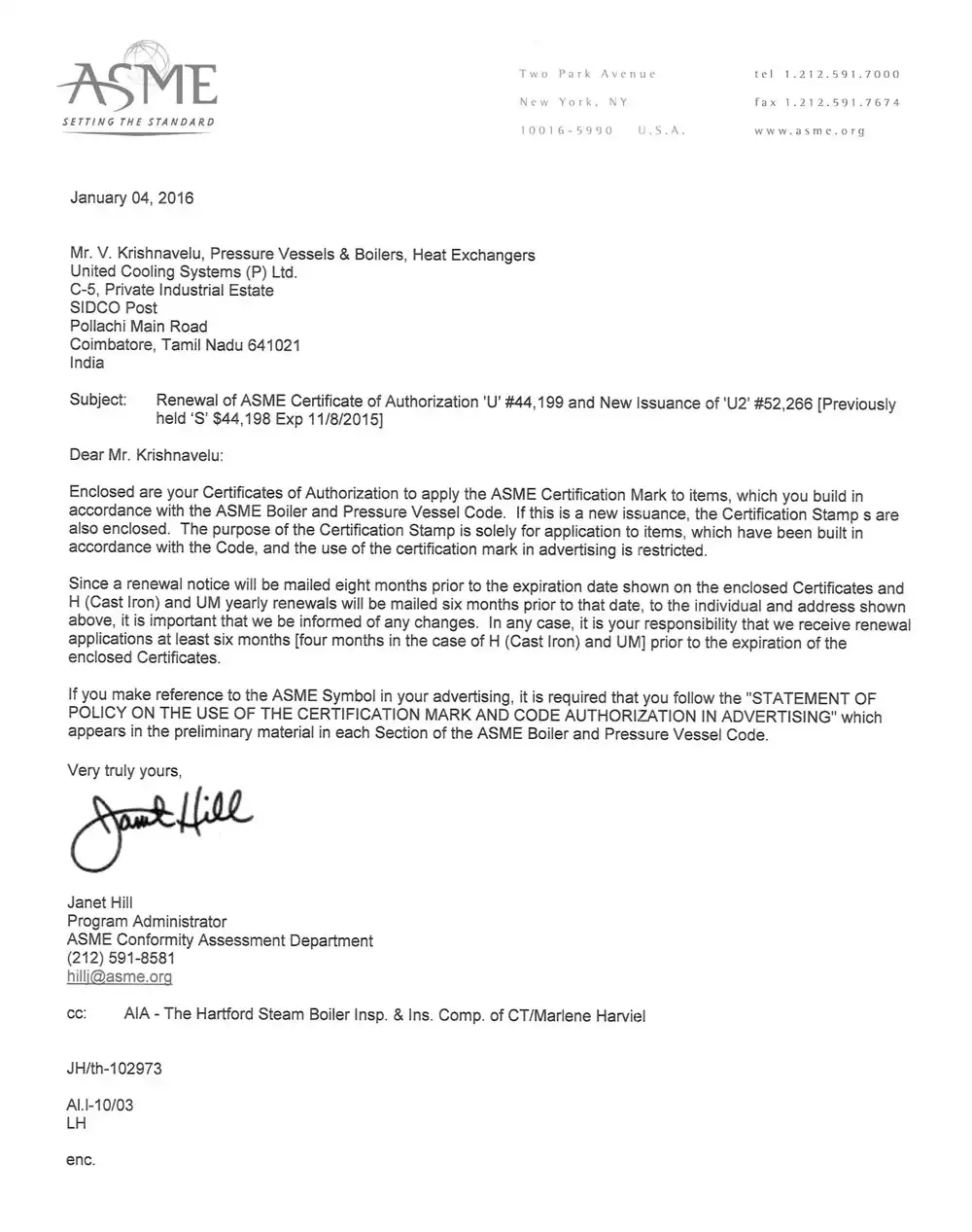
All Fin Fan Cooler from United Cooling Systems are manufactured following strict industry standards such as ASME and API. These codes guarantee the safety, structural integrity, and high quality of our products, making them suitable for demanding industrial environments like power plants, chemical processing facilities, and manufacturing plants. - Tested for Strength and Safety
Before delivery, every Fin Fan Cooler undergoes a hydrostatic test to confirm its ability to withstand pressure without leaks or structural weaknesses. This rigorous testing ensures long-term reliability and gives you confidence that your cooler will perform consistently under operational conditions. - Careful Assembly for Optimal Cooling
Proper assembly is critical for maintaining smooth airflow and maximizing heat transfer. Each component of the Fin Fan Cooler is carefully aligned during assembly to prevent turbulence, ensure uniform cooling, and reduce maintenance requirements. Misaligned parts can decrease efficiency and increase the likelihood of operational issues over time.
Choosing the Right Fin Fan Cooler
Selecting the right Fin Fan Cooler in India is essential to ensure your cooling system operates efficiently, reliably, and cost-effectively. Making the right choice depends on several critical factors that influence performance, durability, and suitability for your specific application.- Application Requirements
Different industries and processes have unique cooling needs. Air-cooled heat exchangers are ideal for open and well-ventilated spaces, while tube-type heat exchangers may be better suited for high-pressure or process-specific applications. The choice of fan type also plays a key role in system performance. Axial fans are generally used for standard airflow requirements, whereas centrifugal fans provide higher pressure, more controlled airflow, quieter operation, and better handling of dust or particulates. Knowing your required cooling capacity, whether in kCal/hr or BTU/hr, is essential to narrowing down the best Fin Fan Cooler model for your process. - Ambient Conditions
Local temperature and humidity significantly affect cooler performance. In hot climates, larger fans or increased cooling surface area may be necessary to achieve optimal heat transfer. In humid regions, careful material selection becomes critical to prevent corrosion and ensure long-term durability. Choosing a Fin Fan Cooler tested for Indian climate conditions can help maintain consistent and reliable operation. - Space Constraints
The available installation area is another key consideration. For facilities with limited space, compact or vertical-type Fin Fan Cooler provide efficient cooling without occupying excessive floor space. Large-scale plants with sufficient area can accommodate horizontal units that offer larger cooling surfaces and higher capacities. - Budget and Long-Term Costs
While upfront cost is important, the total cost of ownership should guide your decision. Selecting energy-efficient models reduces power consumption and operating costs. Choosing durable materials such as stainless steel or aluminium minimizes replacements, and systems designed for easy maintenance help reduce downtime and labor costs. Considering these factors ensures a cost-effective solution over the cooler’s lifecycle. - Model Comparison
To simplify selection, we provide a comparison of our Fin Fan Cooler models side-by-side. Key factors for comparison include cooling capacity, fan type, material (aluminium, copper, stainless steel), dimensions, power consumption, and price range. This allows you to make an informed decision based on your operational needs and budget, ensuring optimal performance and long-term reliability.
Installation and Maintenance of Fin Fan Cooler Heat Exchanger
Proper installation and regular maintenance are essential to ensure that your Fin Fan Cooler operates efficiently and reliably over its service life. Following best practices helps maximize performance, reduce downtime, and extend the longevity of your system.Installation Guidelines
Before installation, the site must be prepared to allow unobstructed airflow around the cooler. The supporting structure should be firmly assembled and secured to prevent any movement during operation. The finned tube bundles must be positioned to receive maximum exposure to ambient air, ensuring effective heat transfer. Fans and motors should be carefully aligned to create smooth, uniform airflow across the fins, which is critical for optimal cooling performance. Correct installation at the outset prevents future operational issues and enhances overall system efficiency.Maintenance Tips
Regular maintenance is crucial for keeping a Fin Fan Cooler in peak condition. Performing vibration analysis helps detect imbalances early, preventing mechanical failures and prolonging equipment life. Routine tube cleaning removes dirt, dust, and debris that can accumulate on the fins and tubes, maintaining efficient heat exchange. Fans and fins should also be cleaned regularly to ensure uninterrupted airflow and consistent cooling performance. Inspecting moving parts, such as fan blades and motor components, for wear or damage helps prevent unexpected breakdowns and reduces repair costs.Adhering to these installation and maintenance practices ensures that your Fin Fan Cooler delivers reliable performance, minimizes downtime, and provides a long-term, cost-effective cooling solution for industrial applications.
Conclusion
Fin Fan Cooler provide an efficient, reliable, and environmentally friendly solution for industrial and commercial cooling needs. By using ambient air instead of water, they help reduce operational costs, minimize environmental impact, and offer a sustainable alternative for industries where water resources are limited.With advanced design, high-quality materials, and precise engineering, Fin Fan Cooler ensure optimal heat transfer, durability, and long-term performance. Proper selection, installation, and regular maintenance further enhance their efficiency, making them a cost-effective solution for sectors such as petrochemical, power generation, HVAC, food and beverage, and manufacturing.
Choosing the right Fin Fan Cooler tailored to your application allows you to achieve consistent cooling, reduce energy consumption, and maintain reliable operation even under demanding industrial conditions. By investing in a high-performance, energy-efficient Fin Fan Cooler from United Cooling Systems, you can ensure maximum productivity, lower maintenance costs, and a greener, more sustainable operation.
Frequently Asked Questions
1.What is a Fin Fan Cooler?A Fin Fan Cooler is an air-cooled heat exchanger that removes heat from industrial fluids such as oils, chemicals, or gases using ambient air. Unlike water-cooled systems, it is ideal for industries where water is scarce or its use is impractical. Fin Fan Cooler are widely used in petrochemical, power generation, HVAC, and manufacturing sectors for efficient and reliable cooling.
2.What is Fin Cooling?
Fin cooling refers to enhancing heat transfer by attaching fins to a surface. Fins increase the area exposed to air, allowing more heat to dissipate from the fluid inside tubes or equipment. In Fin Fan Cooler, fin cooling improves efficiency and ensures sustainable, water-free cooling.
3.Which One is Better, Cooler or Fan?
A Fin Fan Cooler is superior to a standalone fan because it combines airflow with heat exchange surfaces. While a fan only moves air, a cooler actively removes heat from fluids through finned tubes, providing efficient and controlled cooling in industrial applications.
4.How Many Types of Fin Fan Cooler Are There?
Fin Fan Cooler are mainly classified based on airflow and orientation. They include Forced Draft Systems, where fans push air through the cooler, and Induced Draft Systems, where fans pull air across finned tubes. They can also be categorized as horizontal or vertical units, and by material—aluminium, copper, or stainless steel—depending on operational requirements.
5.Which is the No. 1 Brand in Air Coolers?
United Cooling Systems is recognized as a leading brand in India for Fin Fan Cooler. Known for its durable, energy-efficient, and customized solutions, the company serves industries like power generation, petrochemical, HVAC, and manufacturing.
6.What is the Main Purpose of Fins?
Fins increase the surface area for heat transfer in a Fin Fan Cooler. By exposing more surface to air, they allow heat from the fluid inside the tubes to dissipate efficiently, enhancing cooling performance, reducing energy consumption, and maintaining consistent operation under high thermal loads.
7.How Do You Choose the Right Fin Size?
Selecting the right fin size depends on factors such as the fluid temperature, airflow rate, and heat transfer requirements. Larger fin surfaces provide higher heat dissipation but can increase airflow resistance. The choice should balance efficient cooling, energy consumption, and the space available for installation. Proper fin design ensures optimal performance and longevity of the Fin Fan Cooler.
8.What Are the Benefits of Fins?
Fins improve heat transfer efficiency, allowing the cooler to handle higher thermal loads. They reduce energy consumption by maximizing the heat exchange surface, maintain consistent fluid temperatures, and contribute to a more compact and cost-effective design. Additionally, fins protect the core tubes and help maintain uniform airflow, reducing hot spots.
9.How Do Fins Work?
Fins work by increasing the contact area between the hot fluid inside the tubes and the ambient air outside. Heat from the fluid moves to the fin surface and is then transferred to the air flowing across it. This process accelerates cooling, ensures uniform temperature distribution, and enhances the overall efficiency of the Fin Fan Cooler system.